
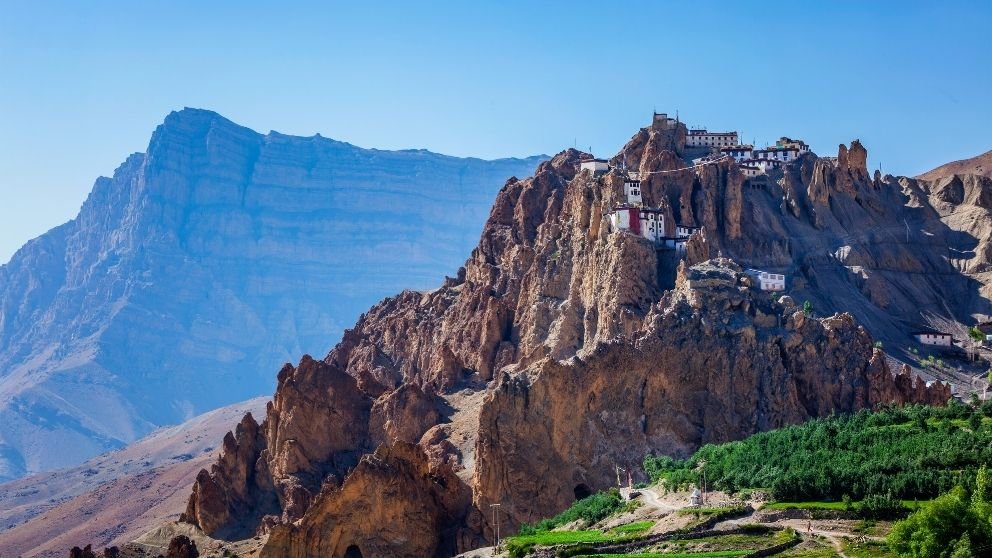
Some places in Spiti Valley impress you with their mountains. Others surprise you with their history. Dhankar Monastery and Lake offer both, along with one of the most remarkable views in the entire valley.
Imagine a centuries-old Buddhist monastery standing on the edge of a rocky cliff, overlooking the meeting point of two Himalayan rivers. Above it, a peaceful mountain lake sits surrounded by barren hills and distant snow-covered peaks.
That is Dhankar.
Located between Tabo and Kaza in Himachal Pradesh, Dhankar is an important destination for travellers exploring Spiti Valley. Whether you’re travelling by motorcycle, car or as part of a guided Spiti tour, this village deserves more than a quick photography stop.
In this guide, we’ll explore the monastery’s history, the Dhankar Lake trek, how to reach the village, and what you should know before visiting.
Where Is Dhankar Monastery Located?
Dhankar is a small Himalayan village in the Lahaul and Spiti district of Himachal Pradesh. It stands high above the Spiti Valley, close to the confluence of the Spiti and Pin rivers.
The village is known for its dramatic landscape, traditional houses and historic Buddhist monastery.
Approximate distances to Dhankar:
- Kaza to Dhankar: 32 km
- Tabo to Dhankar: 30–32 km
- Shichling to Dhankar: 7–8 km uphill
- Dhankar to Dhankar Lake: Approximately 2–3 km on foot, depending on the trail
The road to Dhankar branches off from the main Tabo–Kaza highway near Shichling. From there, a narrow mountain road climbs towards the village.
The final stretch is particularly scenic, with sharp turns, exposed mountain slopes and views over the Spiti River.
For motorcycle riders, it’s an enjoyable detour, but the road requires careful riding and attention to loose gravel and oncoming vehicles.
Dhankar Monastery: A Historic Fortress Above Spiti Valley
Dhankar Monastery, also known as Dhankar Gompa, is one of the most historically significant Buddhist monasteries in Spiti.
Unlike monasteries constructed on relatively stable hillsides, the old Dhankar Monastery appears almost suspended above the valley. Its mud-brick buildings blend into the rocky formations beneath them, making the entire structure look like a natural extension of the mountains.
Dhankar Was Once the Capital of Spiti
Long before Kaza became Spiti’s administrative centre, Dhankar served as the seat of the valley’s traditional rulers.
The village was associated with the Nono, the hereditary ruler of Spiti. Its elevated position made it useful for watching the surrounding valleys and protecting important routes.
The name Dhankar is commonly associated with the idea of a fort built on a cliff.
When you look at the monastery from a distance, its strategic location becomes obvious.
What Can You See Inside Dhankar Monastery?
The old monastery preserves important elements of Tibetan Buddhist heritage, including ancient religious paintings, scriptures and representations of Buddhist deities.
One of its significant religious features is an image of Vairochana Buddha.
The interiors are quite different from the vast landscape outside. Small rooms, traditional architectural details and religious artwork reflect the spiritual life of the region.
Because the old monastery stands on an erosion-prone cliff, parts of the structure are fragile. Visitors should follow local instructions, respect restricted areas and ask permission before taking photographs inside.
A newer monastery complex has also been established in Dhankar.
Dhankar Lake: A Peaceful Lake Above the Monastery
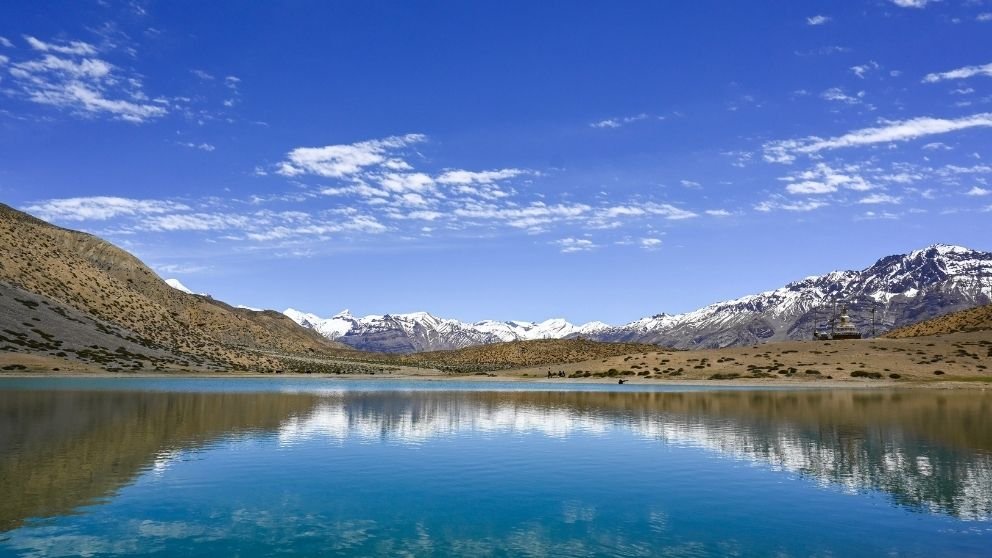
While the monastery is the main historical attraction, Dhankar Lake is the destination for travellers who enjoy trekking and quieter Himalayan landscapes.
Located at approximately 4,140 metres above sea level, the lake is reached by walking uphill from Dhankar village.
Unlike Chandratal Lake, which attracts large numbers of visitors during the summer season, Dhankar Lake involves a dedicated hike.
The surrounding landscape is simple but beautiful: dry mountains, open skies, occasional patches of alpine vegetation and distant Himalayan peaks.
On a calm day, the lake reflects the surrounding landscape. Its appearance changes with the season, weather and water levels.
It is an excellent place to spend some quiet time after the climb.
Dhankar Lake Trek: Distance, Difficulty and Duration
The Dhankar Lake trek is relatively short, but the altitude makes it more demanding than many travellers expect.
You don’t need to be an experienced mountaineer, but reasonable fitness and proper acclimatisation are important.
Dhankar Lake Trek Details
| Trek Information | Details |
|---|---|
| Starting point | Dhankar Village |
| Lake altitude | Approx. 4,140 metres |
| Trek distance | Around 2–3 km one way |
| Difficulty | Moderate due to altitude |
| Ascent duration | Approximately 1–2 hours |
| Total time | Allow 3–4 hours with breaks |
| Recommended season | June to September |
| Trail | Steep, dusty and rocky in sections |
What Is the Trek Like?
The trek begins near the village and climbs steadily above the monastery.
The initial uphill sections can be tiring, especially for visitors who have recently arrived in Spiti.
As you gain height, the views begin to open up. The village becomes smaller below, and the mountains extend across the horizon.
The trail has very little shade, so even a pleasant-looking morning can become tiring under the strong high-altitude sun.
After the climb, the lake appears in a relatively open mountain setting.
The journey is rewarding, but the lake itself isn’t the only attraction. The changing views throughout the trek are equally memorable.
Important Trekking Tips
- Start early in the morning.
- Carry enough drinking water and light snacks.
- Wear shoes with good grip.
- Carry sunscreen, sunglasses and a windproof jacket.
- Walk slowly and take breaks when required.
- Avoid trekking during thunderstorms or poor visibility.
- Don’t attempt the trek immediately after rapidly ascending from a much lower altitude.
- Respect the lake’s local religious significance; avoid swimming or washing in it.
If you experience significant headache, dizziness, nausea or unusual breathlessness, stop ascending. Descend and seek medical assistance if symptoms persist or worsen.
How to Reach Dhankar Monastery and Lake
Dhankar can be visited from either the Shimla–Kinnaur side or the Manali–Kaza side of Spiti Valley, depending on the season and road conditions.
From Tabo to Dhankar
Travellers coming from Tabo can follow the main road towards Kaza.
Near Shichling, a branch road climbs towards Dhankar village. The drive includes narrow sections and steep turns, so travel at a comfortable speed.
Once you reach the village, you can visit the monastery and begin the lake trek if you have enough time and are properly acclimatised.
From Kaza to Dhankar
Dhankar is approximately 32 km from Kaza and can be explored as a half-day or longer excursion.
The route follows the Spiti Valley road towards Tabo before turning uphill near Shichling.
Starting from Kaza is particularly convenient for travellers who have already spent time acclimatising in the region.
Can You Reach Dhankar Lake by Motorcycle?
No. Motorcycles and cars can reach Dhankar village, subject to road conditions, but Dhankar Lake is accessible only by trekking.
Riders should park their motorcycles in an appropriate designated or locally advised area before starting the hike.
Don’t attempt to ride on the trekking trail.
Best Time to Visit Dhankar Monastery and Lake
Although Dhankar can sometimes be reached outside the main tourist season, road access and trekking conditions change significantly throughout the year.
May to June
Late spring and early summer bring improving conditions across Spiti.
The surrounding mountains may still have snow at higher elevations, and the weather can be cold.
The lake trek should only be attempted when the trail is clear and safe.
July to August
These are popular months for exploring Spiti Valley.
Conditions around Dhankar can be relatively dry because of Spiti’s rain-shadow location, but the roads leading into the region may experience landslides and rain-related disruptions.
Morning visits are generally preferable for hiking.
September to October
September is particularly attractive for travellers who enjoy clear mountain views, quieter roads and crisp autumn weather.
October becomes noticeably colder, and early snowfall can affect the higher trekking trails.
For a combination of accessibility, sightseeing and trekking, June through September is generally the most practical period.
Dhankar Monastery on a Spiti Valley Bike Trip
For riders exploring Spiti Valley, Dhankar makes an interesting break between the longer stretches of mountain riding.
Instead of spending the entire day on the motorcycle, you get the opportunity to explore a historic village and experience the mountains on foot.
One practical route is:
Tabo → Dhankar Monastery → Kaza
On this route, you can visit Tabo Monastery, continue towards Dhankar and eventually reach Kaza for the night.
If you also want to trek to Dhankar Lake, make sure you allow several additional hours.
Trying to cover Tabo, Dhankar Lake, Pin Valley and Kaza in a single day may leave very little time to enjoy each destination.
At Spiti Riders, we believe a good Himalayan journey isn’t only about covering kilometres. It’s about having enough time to experience the places along the route.
Explore our Spiti Valley Bike Tour Packages to plan a motorcycle adventure through the region.
Where to Stay Near Dhankar
Dhankar village offers basic local homestays and limited guest accommodation.
Staying in the village gives travellers an opportunity to experience a quieter side of Spiti, away from the busier market areas.
Accommodation facilities are generally simple, and availability can vary seasonally.
Kaza and Tabo provide additional accommodation options for travellers who prefer to stay in larger settlements.
If trekking to the lake is your main priority, staying nearby can make an early morning start easier.
Important Things to Know Before Visiting Dhankar
Dhankar is a sensitive Himalayan environment, both culturally and geographically.
Its historic monastery needs careful preservation, and the trekking landscape is vulnerable to littering and irresponsible tourism.
Keep these points in mind:
- Respect Buddhist customs and dress appropriately when visiting the monastery.
- Avoid touching fragile murals, religious objects or old structures.
- Carry your waste back from the lake trek.
- Don’t depend on mobile connectivity throughout the journey.
- Carry sufficient water and keep some cash for local expenses.
- Check road and trail conditions before travelling.
- Avoid disturbing wildlife and the natural surroundings.
Most importantly, remember that high-altitude travel requires patience. A slower itinerary is often more enjoyable than a rushed one.
Frequently Asked Questions About Dhankar Monastery and Lake
1. What is Dhankar Monastery famous for?
Dhankar Monastery is famous for its dramatic cliffside location, Buddhist heritage and historical importance as part of Spiti’s former ruling centre. It also overlooks the landscape around the confluence of the Spiti and Pin rivers.
2. How far is Dhankar Monastery from Kaza?
Dhankar Monastery is approximately 32 km from Kaza by road. Travel time depends on road conditions, traffic and stops along the route.
3. Is Dhankar Lake worth visiting?
Yes, especially for travellers who enjoy short mountain hikes, peaceful landscapes and photography. The journey to the lake offers excellent views of the surrounding Spiti mountains.
4. Is the Dhankar Lake trek difficult?
The trek is considered moderate. Although the distance is relatively short, the steep ascent and altitude above 4,000 metres can make it challenging.
5. Can beginners do the Dhankar Lake trek?
Fit beginners may be able to complete the trek after proper acclimatisation and in suitable weather. Travellers experiencing altitude-related symptoms should not attempt the climb.
6. Can Dhankar Monastery and Lake be visited in one day?
Yes. You can visit both in a single day if you start early and allow enough time for the hike. Plan approximately half a day or longer, excluding substantial travel time from other locations.
7. Is there a road to Dhankar Lake?
No. The motorable road leads to Dhankar village. Reaching the lake requires an uphill trek.
8. What is the best month to visit Dhankar Lake?
June through September is generally a suitable period, although actual trekking conditions depend on snowfall, weather and trail safety.
Final Thoughts: Why Dhankar Deserves a Place in Your Spiti Itinerary
Dhankar is one of those places where the journey, history and landscape come together naturally.
The old monastery tells the story of Spiti’s cultural and political past. The village reveals a quieter side of Himalayan life. And the lake trek offers a chance to leave the road behind and experience the mountains at a slower pace.
You don’t have to complete the lake trek to appreciate Dhankar. Even a visit to the monastery and surrounding viewpoints can become one of the most memorable stops of your Spiti journey.
But if you’re physically prepared, properly acclimatised and have enough time, the walk to Dhankar Lake adds another dimension to the experience.
Planning a Spiti Valley motorcycle adventure?
Discover our Spiti Bike Tour Packages and explore the Himalayas with a locally managed tour team that understands the region, its roads and the challenges of high-altitude travel.
Spiti Riders — Ride Beyond the Ordinary.