
There are certain mountain roads in the Himalayas that you remember long after the journey ends. The winding roads, snow-covered peaks, unpredictable weather and feeling of reaching somewhere truly remote make them unforgettable.
Kunzum Pass is one of those places.
Located at an altitude of approximately 4,551 metres (14,931 feet), Kunzum Pass is one of the most important mountain passes in Himachal Pradesh. It connects the remote Spiti Valley with the Lahaul region and provides the spectacular high-altitude crossing on the seasonal Manali–Kaza route.
For travellers planning a Spiti Valley bike trip, crossing Kunzum Pass is often one of the most exciting parts of the journey.
The road takes you through barren mountains, deep valleys, streams and some of the most dramatic landscapes in the Indian Himalayas.
But Kunzum is not just about adventure. It is also a place of spiritual importance, where travellers stop at the Kunzum Mata Temple before continuing their journey.
In this guide, we’ll explore everything you should know about Kunzum Pass, including its location, altitude, routes from Manali and Kaza, nearby Chandratal Lake, road conditions and essential travel tips.
Where Is Kunzum Pass Located?
Kunzum Pass, also known as Kunzum La, is a high-altitude mountain pass in the Lahaul and Spiti district of Himachal Pradesh.
The pass lies in the eastern Kunzum Range of the Himalayas and serves as a geographical connection between two distinct mountain regions: Lahaul and Spiti.
While Lahaul features rugged mountains, glaciers and river valleys, Spiti is famous for its vast cold-desert landscapes, ancient monasteries and traditional Himalayan villages.
Travelling across Kunzum Pass allows visitors to experience the transition between these two environments.
Kunzum Pass at a Glance
| Information | Details |
|---|---|
| Location | Lahaul and Spiti, Himachal Pradesh |
| Altitude | Approx. 4,551 metres (14,931 feet) |
| Distance from Kaza | Approx. 75–80 km |
| Distance from Manali | Approx. 120–125 km |
| Connected regions | Lahaul and Spiti valleys |
| Best travel period | Generally June to September |
| Winter accessibility | Usually closed due to snowfall |
| Famous for | Mountain views, Kunzum Mata Temple and adventure riding |
| Nearby attractions | Chandratal Lake, Batal and Losar |
The pass is located on the road connecting Gramphu and Kaza, making it an important part of many Spiti Valley road trip itineraries.
Note: Some local signboards and tourism references give the altitude as approximately 4,590 metres. The commonly cited elevation is 4,551 metres.
Why Is Kunzum Pass Famous?
Kunzum Pass is famous for several reasons, but its biggest attraction is the spectacular Himalayan landscape.
Unlike many mountain passes surrounded by dense forests, Kunzum offers open views of rugged mountains, snow-covered peaks and high-altitude valleys.
The scenery feels almost untouched.
For motorcycle riders, the journey is particularly memorable because of the challenging approach roads, sharp bends and changing terrain.
However, the pass also holds considerable geographical and cultural significance.
1. A Gateway Between Lahaul and Spiti
Kunzum Pass connects the Lahaul region with Spiti Valley through the seasonal mountain road.
When the pass is open, travellers can travel between Manali and Kaza without taking the much longer route through Shimla and Kinnaur.
During winter, snowfall usually blocks this connection.
2. Incredible Himalayan Views
From the pass, travellers can enjoy panoramic views of the surrounding mountains and the high-altitude landscape.
On clear days, snow-covered peaks and glaciers in the greater Chandra Valley region create an unforgettable backdrop.
The surrounding scenery is particularly impressive when patches of snow remain on the slopes.
3. Kunzum Mata Temple
The summit is home to Kunzum Mata Temple, a small but culturally important shrine where many travellers stop to seek blessings for a safe journey.
4. A Major Highlight of Spiti Bike Trips
For adventure riders, crossing Kunzum is often considered an important milestone of a summer Spiti Valley circuit.
The route includes rough roads, river crossings and remote Himalayan settlements, creating a riding experience very different from ordinary highways.
Kunzum Mata Temple: The Spiritual Side of Kunzum Pass
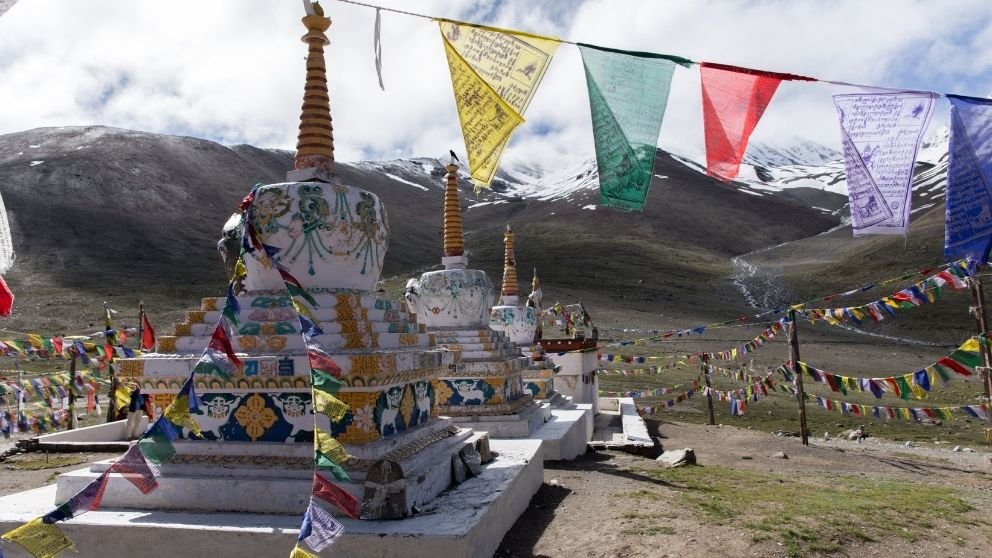
One of the first things you’ll notice at Kunzum Pass is the presence of colourful prayer flags and the small Kunzum Mata shrine.
Kunzum Mata is regarded by local devotees as a protective goddess associated with the pass and the surrounding mountains.
Travellers often stop here before continuing their journey.
A common local tradition involves moving around the shrine in a clockwise direction as a mark of respect and to seek blessings for safe passage.
You’ll also find Buddhist prayer flags around the area, reflecting the cultural and religious traditions of Lahaul and Spiti.
The combination of Himalayan scenery, prayer flags and a peaceful shrine creates a distinctive atmosphere.
Even if you’re visiting only for photography, it’s worth spending a few minutes appreciating the cultural significance of the place.
Travel tip: Respect local religious practices, avoid disturbing offerings and never block the mountain road while stopping near the temple.
How to Reach Kunzum Pass from Manali
The journey from Manali to Kunzum Pass is one of the most adventurous road trips in Himachal Pradesh.
The route passes through Lahaul before climbing towards the high mountain pass.
Manali to Kunzum Pass Route
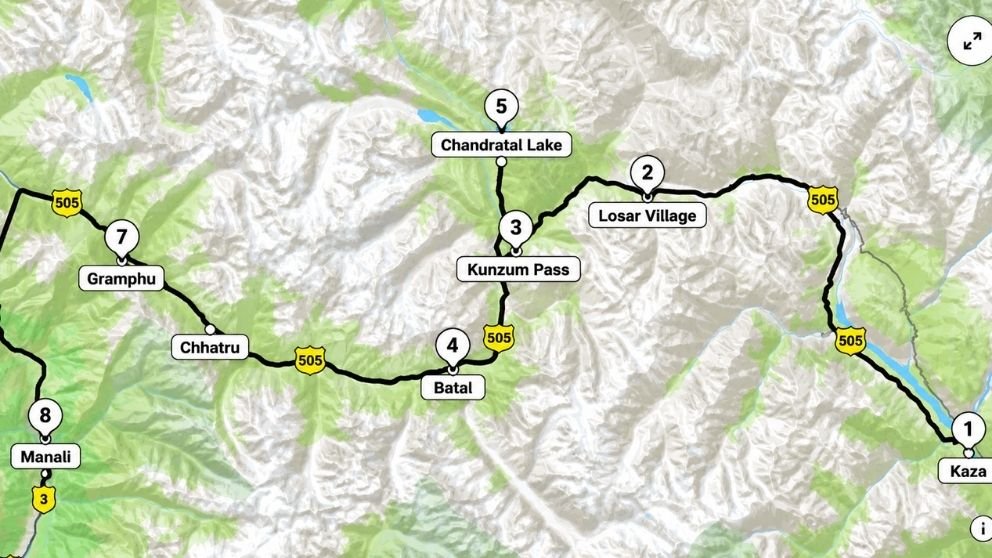
Manali → Atal Tunnel → Koksar → Gramphu → Chhatru → Chhota Dhara → Batal → Kunzum Pass
The journey begins from Manali and continues towards the Atal Tunnel.
After crossing the tunnel into Lahaul, travellers proceed towards Gramphu and enter the rugged Chandra Valley route.
Beyond Gramphu, road conditions become considerably more challenging.
You’ll encounter rocky sections, loose gravel, streams and sections where driving or riding requires extra care.
The journey continues through Chhatru and Chhota Dhara before reaching Batal.
From Batal, the road climbs towards Kunzum Pass through a series of steep mountain bends.
What Makes This Route Challenging?
The section between Gramphu and Batal is particularly demanding.
Unlike conventional mountain highways, parts of this road may have broken surfaces, water crossings and loose stones.
Conditions can change quickly because of snowmelt, rainfall and road maintenance work.
During the summer, streams flowing across the road can become stronger as the day progresses.
For motorcycle riders, an early start is recommended, along with appropriate protective equipment and sufficient time for unexpected delays.
The route is beautiful, but it should never be underestimated.
How to Reach Kunzum Pass from Kaza
If you’re already exploring Spiti Valley, Kunzum Pass can be reached from Kaza through Losar village.
Kaza to Kunzum Pass Route
Kaza → Rangrik → Hansa → Losar → Kunzum Pass
The journey is approximately 75–80 kilometres, depending on the precise route and starting point.
Travelling from Kaza, the road follows the Spiti Valley towards the remote village of Losar.
The landscape gradually changes as you travel towards the pass.
Wide valleys, rocky mountains and occasional streams dominate the surroundings.
Losar is one of the last inhabited settlements before reaching Kunzum Pass from the Spiti side.
From Losar, the road continues uphill through a high-altitude landscape.
Compared with the rougher Gramphu–Batal approach, the Kaza side is generally easier to navigate when road conditions are favourable.
However, snow, ice and damaged road sections can still create challenges.
Can You Visit Kunzum Pass as a Day Trip from Kaza?
Yes, it may be possible to visit Kunzum Pass and return to Kaza on the same day when the road is fully open.
However, allow enough time for slow mountain driving, photographs and unexpected delays.
If you’re planning to continue towards Chandratal Lake or Manali, it’s generally better to include the pass as part of a longer itinerary rather than rushing the journey.
Kunzum Pass to Chandratal Lake: A Beautiful Himalayan Detour
One of the biggest attractions near Kunzum Pass is Chandratal Lake, also known as the Moon Lake.
Located at approximately 4,250 metres above sea level, Chandratal is among the most beautiful high-altitude lakes in Himachal Pradesh.
The lake is known for its crescent-like shape, crystal-clear water and mountain surroundings.
On calm days, the reflections of the surrounding peaks create a remarkable landscape.
How to Reach Chandratal from Kunzum Pass
Travellers crossing Kunzum Pass towards Manali descend towards Batal.
Near Batal, a separate road leads towards the Chandratal area.
Route: Kunzum Pass → Batal → Chandratal Road → Lake Parking Area → Short Walk to Chandratal Lake
The lake lies approximately 21 kilometres from Kunzum Pass by the general access route, although actual travel distance varies.
The final approach to the lake requires walking from the designated parking area.
The road towards Chandratal is narrow and rough, with limited passing space in certain sections.
Motorcycle riders should take extra care and avoid attempting the road during bad weather or when conditions are unsuitable.
Can You Stay Near Chandratal Lake?
During the main travel season, permitted seasonal camps may operate in designated areas away from the lake.
Accommodation is usually basic and should be arranged in advance, particularly during popular travel months.
Camping directly beside the lake is restricted because Chandratal lies within a protected wildlife landscape.
The area is ecologically sensitive, and visitors should avoid littering, swimming or disturbing the natural surroundings.
If Chandratal is included in your Spiti itinerary, allow sufficient time to enjoy the scenery without rushing.
Best Time to Visit Kunzum Pass
The best time to visit Kunzum Pass depends on snowfall, road conditions and seasonal access.
Unlike destinations such as Kaza and Tabo, Kunzum Pass is generally not accessible by road throughout the year.
May to June: Snow Clearance and Early Summer
During late spring, snow clearance operations gradually restore access to the pass.
In some years, the route may become accessible during May, while in others, opening is delayed until June or later.
Even when the road first opens, travellers may encounter snow walls, melting snow and damaged road sections.
Early-season visitors must check local road conditions rather than assuming the route is open.
July to August: Main Summer Travel Season
July and August are generally among the most practical months for crossing Kunzum Pass.
The route is often accessible during favourable weather, and many travellers include it in their Spiti Valley circuit.
However, snowmelt can create water crossings, while rainfall in the Lahaul region may affect the road.
A clear morning doesn’t guarantee safe conditions for the entire journey.
September: Excellent Mountain Scenery
September is a beautiful time to experience Kunzum Pass.
The skies can be clearer, the mountain landscapes appear striking, and there may be fewer travellers compared with the busiest summer weeks.
However, temperatures drop significantly, particularly at higher elevations.
Warm riding gear is essential.
October to April: Snowfall and Seasonal Closure
October is a transition period when snowfall can begin affecting the pass.
The road may close during October or November, depending on weather conditions.
From late autumn through winter and into spring, Kunzum Pass generally remains inaccessible by road because of snow accumulation.
For travellers planning a Spiti bike trip, June through September is usually the safest planning window for a Kunzum crossing, provided the official road status confirms that the route is open.
Kunzum Pass Road Conditions: What Travellers Should Expect
One of the most important things to understand about Kunzum Pass is that road conditions can change quickly.
A route that was manageable a few days earlier may become difficult because of fresh snowfall, water crossings or road damage.
Kaza to Losar
This stretch generally offers a more manageable mountain-road experience, although damaged surfaces and construction work are possible.
Losar to Kunzum Pass
The road climbs towards the high mountain pass.
Snow may remain near the road in early summer, and sudden weather changes are possible.
Kunzum Pass to Batal
This section includes steep descents, hairpin bends and exposed terrain.
Travellers should use low gears, maintain a controlled speed and pay attention to loose road surfaces.
Batal to Gramphu
This is often one of the most challenging sections of the entire Manali–Kaza route.
Expect rocky sections, water crossings and potentially slow progress.
Road conditions here can determine whether your journey continues comfortably or becomes significantly delayed.
Important: Road-opening dates are not fixed. Always check local administrative advisories and the latest road status before travelling.
Crossing Kunzum Pass on a Motorcycle
For motorcycle enthusiasts, Kunzum Pass offers an adventurous Himalayan riding experience.
The dramatic scenery and challenging roads make it a memorable part of a summer Spiti Valley bike tour.
However, the route requires preparation, particularly for riders who have limited experience on rough mountain roads.
Choose a Suitable Motorcycle
Adventure-oriented motorcycles such as the Royal Enfield Himalayan are commonly used for Spiti Valley trips.
Ground clearance, reliable brakes, suitable tyres and a comfortable riding position can make a significant difference on rough sections.
However, motorcycle capability is only one part of the equation.
Rider experience, road conditions and careful planning are equally important.
Carry Essential Riding Equipment
Before attempting the route, make sure you have:
- A properly fitted helmet and protective riding gear.
- Waterproof riding gloves and warm clothing.
- Suitable riding boots.
- Rain protection and additional thermal layers.
- Basic puncture-repair equipment.
- Essential motorcycle tools.
- Drinking water, snacks and personal medication.
- Offline maps and a charged phone.
- Sufficient fuel for the journey.
Start Early
An early start gives you more daylight to handle rough sections, photography stops and possible road delays.
Water crossings may also become stronger later in the day as snowmelt increases.
Never assume that a short distance on a Himalayan map means a short riding time.
Ride at a Controlled Speed
Loose gravel, sharp stones and sudden road damage require attention.
Maintain a safe distance from other vehicles and avoid unnecessary overtaking.
If you encounter a water crossing that appears unsafe, stop and assess the situation rather than riding through it blindly.
Check Fuel Availability
Fuel stations are limited along this route.
For riders travelling from Kaza towards Manali, filling the tank at Kaza is a sensible precaution.
Do not depend on finding reliable petrol supplies at Losar, Batal or along the Gramphu road.
At Spiti Riders, we understand how important proper route planning is for a Himalayan motorcycle adventure.
Our locally managed Spiti Valley Bike Tour Packages focus on giving riders the opportunity to experience the region while accounting for road conditions, seasonal access and realistic daily travel distances.
Kunzum Pass Altitude: Is Altitude Sickness a Concern?
At approximately 4,551 metres above sea level, Kunzum Pass is a high-altitude destination where oxygen availability is significantly lower than at sea level.
Travellers arriving quickly from lower altitudes may experience symptoms of acute mountain sickness.
Common symptoms include:
- Headache
- Nausea
- Dizziness
- Fatigue
- Loss of appetite
- Difficulty sleeping
The risk is particularly relevant for travellers who reach the pass rapidly from Manali without spending enough time at higher elevations.
How to Reduce Altitude-Related Risks
Allow sufficient time for acclimatisation, avoid unnecessary physical exertion and stay adequately hydrated.
Don’t continue ascending if symptoms of altitude sickness develop.
Severe breathlessness at rest, confusion or difficulty walking can indicate dangerous altitude illness and require urgent descent and medical care.
For this reason, a gradual approach through the Spiti region can be preferable to a rushed itinerary, although no route eliminates altitude risks entirely.
Places to Visit Near Kunzum Pass
Kunzum Pass is surrounded by several interesting destinations that can be included in a longer Spiti Valley journey.
1. Chandratal Lake
One of the most beautiful mountain lakes in Himachal Pradesh, Chandratal is known for its crescent shape and peaceful high-altitude surroundings.
2. Losar Village
Losar is a traditional settlement on the Spiti side of Kunzum Pass.
The village offers a glimpse into rural life in the upper Spiti region, with traditional houses and dramatic mountain views.
3. Batal
Batal is a remote stopping point in the Chandra Valley, located below Kunzum Pass.
It is known among Himalayan travellers as an important rest point on the rough Manali–Kaza route.
4. Chhatru
Located along the road between Gramphu and Batal, Chhatru is surrounded by rocky mountains and dramatic valley scenery.
It serves as a useful landmark while travelling through the remote Chandra Valley.
5. Kaza
Kaza is the main travel base in Spiti Valley.
From Kaza, visitors can explore Key Monastery, Kibber, Langza, Hikkim, Komic and several other destinations.
Should You Cross Kunzum Pass from Manali or Kaza?
This is an important question when planning a Spiti Valley road trip.
Both approaches offer incredible scenery, but they provide different experiences.
Starting from Manali
The Manali route offers direct access to Spiti during the summer season.
However, it involves a rapid ascent to high altitude and potentially challenging road conditions between Gramphu and Batal.
It can be a demanding approach for travellers who have not acclimatised.
Starting from Kaza
If you’re travelling through Spiti after entering from the Shimla and Kinnaur side, you may have spent several days gradually gaining altitude before reaching Kunzum Pass.
This can be beneficial for acclimatisation, provided the itinerary is planned appropriately.
The route also allows you to explore destinations such as Nako, Tabo, Dhankar and Kaza before continuing towards Chandratal and Manali.
Our Recommendation for Spiti Bike Trips
For travellers planning a complete Spiti Valley motorcycle circuit during the appropriate season, entering through Kinnaur, exploring Spiti and exiting via Kunzum Pass towards Manali can be a rewarding combination.
A typical route might follow:
Shimla → Sangla → Kalpa → Nako → Tabo → Dhankar → Kaza → Losar → Kunzum Pass → Chandratal → Manali
However, this circuit should only be planned when Kunzum Pass and the connecting roads are open.
During early spring, late autumn and winter, an itinerary that avoids Kunzum Pass may be necessary.
Important Travel Tips Before Crossing Kunzum Pass
The remoteness of Kunzum Pass makes preparation essential.
Before starting your journey:
- Check road status: Confirm the latest conditions through local authorities and reliable local sources.
- Carry warm clothing: Strong winds and cold temperatures are possible even in summer.
- Download offline maps: Mobile network coverage is unreliable in remote sections.
- Avoid night travel: Broken roads and water crossings become more dangerous in darkness.
- Carry food and water: Services are extremely limited between settlements.
- Allow buffer time: Road closures and delays are common in high mountain regions.
- Respect the environment: Do not litter or damage prayer flags, religious structures or fragile landscapes.
- Avoid risky water crossings: If the water is too deep or fast-moving, don’t attempt to cross.
- Inform someone of your route: Share your travel plans before entering remote stretches with poor connectivity.
A successful Himalayan journey is not about riding as quickly as possible. It’s about reaching your destination safely while enjoying the experience.
Frequently Asked Questions About Kunzum Pass
1. What is the altitude of Kunzum Pass?
Kunzum Pass is commonly listed at approximately 4,551 metres (14,931 feet) above sea level. Some tourism references and local signboards mention approximately 4,590 metres.
2. Where is Kunzum Pass located?
Kunzum Pass is located in the Lahaul and Spiti district of Himachal Pradesh. It connects the Lahaul region with Spiti Valley through a high-altitude mountain road.
3. How far is Kunzum Pass from Kaza?
The distance from Kaza to Kunzum Pass is approximately 75–80 kilometres, depending on the route and starting point.
4. How far is Kunzum Pass from Manali?
Kunzum Pass is approximately 120–125 kilometres from Manali via the Atal Tunnel, Gramphu and Batal route.
5. Is Kunzum Pass open throughout the year?
No. Kunzum Pass generally closes during winter because of heavy snowfall. Road access typically resumes during late spring or summer, depending on snow clearance and weather conditions.
6. What is the best time to visit Kunzum Pass?
June to September is generally the most practical period for planning a visit. However, opening dates and road conditions vary each year.
7. Can we visit Chandratal Lake from Kunzum Pass?
Yes. Travellers can reach the Chandratal access road by descending from Kunzum Pass towards Batal and taking the road towards the lake area, subject to seasonal access.
8. Is Kunzum Pass safe for motorcycle riders?
Kunzum Pass can be crossed by suitably prepared motorcycle riders when the road is officially open and conditions are favourable. However, rough roads, river crossings, altitude and changing weather make it a challenging route.
9. Can beginners ride to Kunzum Pass?
Beginners with limited experience on rough mountain roads may find the route difficult, particularly between Batal and Gramphu. Gaining experience and travelling with knowledgeable local support can help reduce risks.
10. Can we visit Kunzum Pass in March or April?
The motorable road across Kunzum Pass is normally blocked by snow during March and April. Travellers visiting Spiti in these months should plan routes that do not depend on crossing the pass.
Final Thoughts: Why Kunzum Pass Deserves a Place in Your Spiti Valley Itinerary
Kunzum Pass is more than a high-altitude crossing between two Himalayan valleys.
It is a place where mountain scenery, adventure and local traditions come together.
The journey takes you through rugged valleys, remote settlements, winding roads and landscapes that feel completely different from the usual hill-station experience.
For motorcycle riders, crossing Kunzum Pass can be one of the most memorable moments of a Spiti Valley adventure.
But it is also a reminder that Himalayan travel requires respect for nature, careful preparation and flexibility.
Roads can close unexpectedly, weather can change within minutes, and the mountains often determine the pace of the journey.
At Spiti Riders, we believe the best Himalayan adventures are those that balance excitement with thoughtful planning.
We’re a locally operated team that manages our trips directly, helping travellers explore Spiti Valley with people who understand the region and its mountain roads.
Planning your next Himalayan motorcycle adventure?
Explore our Spiti Valley Bike Tour Packages and discover the experience of riding through one of India’s most extraordinary mountain landscapes.
Spiti Riders — Ride Beyond the Ordinary.