
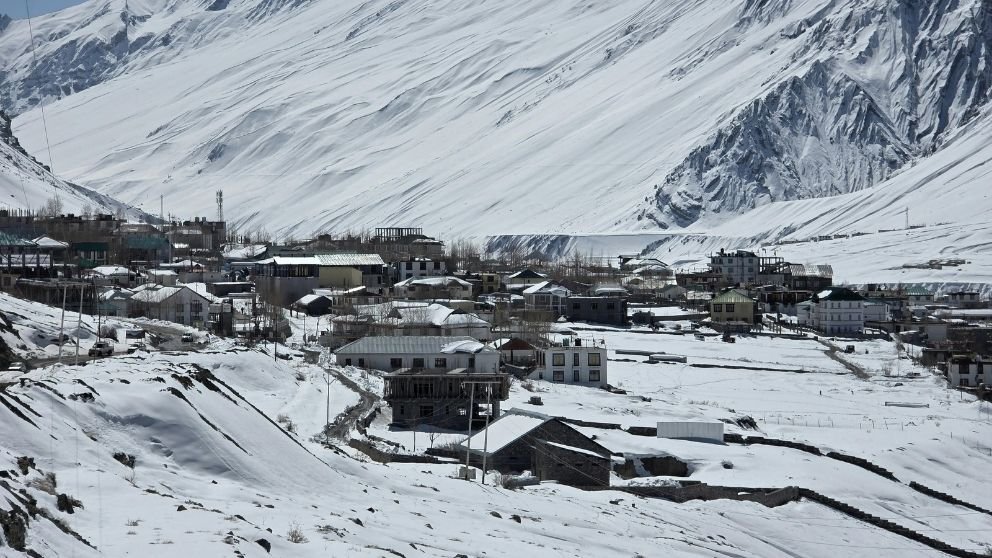
Have you ever imagined visiting Spiti Valley when the mountains are covered in snow, the villages are almost silent, and the entire landscape looks completely different from the summer season?
That’s exactly what makes Spiti Valley in February so special.
While most travellers plan their Spiti adventures between May and October, February offers an entirely different experience. The roads are quieter, the mountains are covered with winter snow in many areas, and everyday village life continues despite the freezing temperatures.
But travelling to Spiti in February isn’t like taking a regular holiday to Manali or Shimla.
Temperatures can fall below -20°C, roads may become inaccessible after snowfall, and many hotels and tourist facilities remain closed for winter.
So, can you actually visit Spiti Valley in February? How do you reach Kaza? What places can you explore? And is it a good month for a motorcycle trip?
Let’s understand everything before planning your journey.
What Is Spiti Valley Like in February?
February is still deep winter in Spiti Valley.
Unlike the busy summer months, when motorcycles and tourist vehicles travel across the valley, February is quieter and more remote.
Snow may cover the mountains and village roads, frozen streams become part of the landscape, and the famous brown mountains of Spiti take on beautiful shades of white.
On clear days, you can experience brilliant blue skies and spectacular views of the Himalayan peaks. However, sunshine doesn’t necessarily mean comfortable weather. Strong winds and freezing temperatures can make even a short walk challenging.
What makes February particularly interesting is the opportunity to experience a quieter side of Spiti.
Local communities continue their daily lives, monasteries remain important centres of village life, and a stay in a traditional homestay offers something very different from a conventional sightseeing trip.
If you enjoy remote landscapes, photography and understanding local Himalayan culture, February can be memorable.
But if you’re looking for comfortable hotels, easy road travel and a packed sightseeing itinerary, you may want to choose another month.
Spiti Valley Weather and Temperature in February
February is among the coldest months of the year in Spiti Valley.
In and around Kaza, temperatures can remain below freezing during the day. At night, temperatures may drop to around -15°C to -25°C, and some locations can experience even colder conditions.
Actual temperatures vary with altitude, weather systems and local geography.
| Weather factor | What to expect in February |
|---|---|
| Daytime | Very cold, often near or below freezing |
| Nighttime | Severe sub-zero temperatures |
| Snowfall | Possible throughout the month |
| Road conditions | Snow, ice and temporary closures |
| Tourist crowds | Very low |
| Accommodation | Limited winter homestays and guesthouses |
| Motorcycle travel | Generally not recommended |
Travellers should also understand how freezing weather affects daily activities.
Water taps may freeze, hot water may not be available throughout the day, and rooms can become extremely cold after sunset.
Mobile phone batteries and power banks may lose charge faster in freezing temperatures.
These are normal challenges of living and travelling in a high-altitude winter environment.
Does It Snow in Spiti Valley in February?
Yes, snowfall is possible in Spiti Valley during February, and many higher-altitude areas may already have accumulated snow from previous winter storms.
Places around Kaza, Kibber, Chicham, Langza, Hikkim and Komic can experience significant winter snow.
However, there’s something important to understand.
Visiting Spiti in February does not guarantee fresh snowfall during your stay.
You might arrive on a clear, sunny day and still see snow-covered mountains all around you. Alternatively, a fresh snowfall could change the entire landscape overnight.
Heavy snow can also block roads and leave travellers unable to continue their planned journey.
For this reason, it’s better to plan a flexible winter experience rather than travelling with the sole expectation of seeing snowfall on a particular day.
Is Spiti Valley Open in February?
Yes, Spiti Valley can be accessible in February, but only when road and weather conditions allow.
There are two main ways to reach Spiti Valley, and understanding the difference is essential.
Shimla to Kaza via Kinnaur – The Main Winter Approach
The route through Shimla and Kinnaur is generally the more practical option for reaching Spiti in February.
The journey follows:
Shimla → Narkanda → Rampur → Reckong Peo → Pooh → Nako → Tabo → Kaza
This route doesn’t require crossing Kunzum Pass and provides a road connection to Spiti during much of the year.
However, it is not guaranteed to remain open every day.
Heavy snowfall, icy roads, falling rocks and landslides can temporarily interrupt the journey.
Some stretches may become especially difficult early in the morning because of black ice.
Travellers should confirm current road conditions with the local administration and plan the journey in stages rather than attempting to reach Kaza in a single day.
Manali to Kaza via Kunzum Pass – Closed in February
The Manali–Kaza route through Kunzum Pass is normally closed during February because of heavy winter snow.
Even though the Atal Tunnel allows access to parts of Lahaul Valley, it does not mean that the road from Manali to Kaza is open.
Travellers should not plan to complete the traditional Shimla–Spiti–Manali circuit during February.
The route towards Chandratal Lake is also normally inaccessible by road during this period.
Important: Never assume a road is safe simply because another traveller used it a few days earlier. Winter conditions can change quickly.
How to Reach Spiti Valley in February
For travellers coming from Delhi, Mumbai, Pune, Bangalore, Chennai or other cities, Chandigarh is a practical gateway for travelling towards Shimla.
You can reach Chandigarh by flight or train and then continue towards Shimla by road.
From Shimla, the journey proceeds through Kinnaur towards Spiti Valley, subject to road conditions.
For February travel, we recommend using a suitable vehicle with an experienced local driver who understands Himalayan winter roads.
Even a 4×4 vehicle cannot guarantee safe passage over ice or through heavy snowfall.
Avoid tight travel schedules, especially when booking return flights or trains.
It’s always better to have additional days available in case weather conditions delay your journey.
Best Places to Visit in Spiti Valley in February
One of the most common mistakes travellers make is planning February sightseeing exactly like a summer Spiti trip.
Winter is different.
Some popular destinations may be accessible, while others may remain blocked because of snow.
Here are a few places worth considering when conditions permit.
1. Kaza – Experience the Quiet Side of Spiti
Kaza is the main town of Spiti Valley and a common base for winter travellers.
In February, you’ll find a very different atmosphere from the regular tourist season.
The streets are quieter, the surrounding mountains may be covered in snow, and only a limited number of tourist accommodations remain operational.
Rather than rushing from one attraction to another, spend time enjoying the landscape, trying local food and understanding how people live in such extreme conditions.
2. Key Monastery – A Beautiful Winter Landscape
Key Monastery is one of Spiti Valley’s most recognisable attractions.
Located on a hill above the valley, the monastery looks particularly impressive against snow-covered mountains.
If the road is accessible and the monastery is receiving visitors, it can be a rewarding winter stop.
Remember to respect local customs and ask permission before photographing people or religious activities.
3. Kibber and Chicham – Snow-Covered Himalayan Villages
Kibber and Chicham are famous for their high-altitude landscapes and stunning mountain views.
In February, the region can be covered with snow, making it especially appealing for photography and travellers interested in remote Himalayan life.
However, accessibility is entirely weather-dependent.
If the road is blocked or unsafe, don’t attempt to reach these villages simply to complete a sightseeing checklist.
4. Langza, Hikkim and Komic – Only If Roads Permit
These high-altitude villages are among Spiti’s best-known attractions during summer.
In February, reaching them can be extremely difficult.
Heavy snow and ice may block the connecting roads for extended periods.
Treat these villages as optional destinations rather than essential parts of a winter itinerary.
5. Tabo and Nako – Winter Stops Along the Journey
Tabo and Nako lie along the Kinnaur approach towards Kaza.
Tabo is known for its ancient monastery, while Nako is a picturesque village surrounded by dramatic Himalayan scenery.
Both can offer interesting winter experiences when roads and accommodation are available.
However, don’t assume that Nako Lake will be safely frozen or suitable for walking on. Never step onto frozen lakes or rivers without professional local assessment.
February Is Also an Interesting Time for Local Culture
One experience that makes February different from many other months is the possibility of witnessing Losar, the Tibetan New Year, which is celebrated according to the lunar calendar.
In Spiti, Tibetan Buddhist traditions play an important role in local community life.
Losar may bring religious ceremonies, family gatherings and cultural celebrations to certain communities.
The exact dates vary from year to year, and not every monastery or village holds public celebrations on the same dates.
If experiencing local culture interests you, ask local hosts about suitable opportunities to observe these traditions respectfully.
February also falls within the winter wildlife-viewing season in parts of Spiti, particularly around the Kibber region, where snow leopards inhabit the mountains.
However, sightings are rare and never guaranteed. Wildlife observation should only be undertaken responsibly with experienced local guides, without approaching or disturbing animals.
Is February a Good Time for a Spiti Valley Bike Trip?
Many motorcycle enthusiasts dream of riding through Spiti’s snow-covered landscapes.
But there’s a major difference between seeing snow from a vehicle and riding a motorcycle over icy mountain roads.
February is generally not a suitable month for a conventional Spiti Valley bike tour.
There are several reasons:
- Black ice can make roads extremely slippery.
- Snowfall may block sections of the highway without warning.
- Sub-zero temperatures can affect rider concentration and endurance.
- Motorcycle traction becomes unpredictable on icy surfaces.
- Rescue and mechanical assistance can be difficult in remote areas.
- The Manali–Kunzum Pass route remains closed.
Even experienced riders should not underestimate these conditions.
At Spiti Riders, we focus on planning motorcycle adventures around realistic road conditions rather than simply encouraging guests to ride during every month of the year.
Our regular guided Spiti bike tours are planned from March to October, with early-season trips subject to weather and route accessibility.
If you’re interested in a snow-season motorcycle adventure, explore our Spiti Bike Tour in March and review the route and safety arrangements before booking.
Are Hotels and Homestays Available in February?
Accommodation is one of the most important things to arrange before travelling to Spiti in February.
Many hotels and guesthouses close during winter because of freezing water systems, limited tourism and the difficulty of operating in extreme cold.
However, some local homestays and guesthouses may continue accepting visitors.
A traditional homestay can also provide a more personal winter experience.
Before booking, confirm whether the property has heating, meals, usable toilets, drinking water and suitable access from the main road.
Remember that a room heater does not necessarily mean you will have hot running water or uninterrupted electricity.
Also, never use charcoal or fuel-burning heaters inside poorly ventilated rooms because of the risk of carbon monoxide poisoning.
Suggested Spiti Valley February Itinerary
If winter road conditions allow, a relaxed journey from Chandigarh towards Spiti can be planned over approximately 9–10 days.
This is only an indicative travel framework, not a guaranteed February departure plan.
| Day | Travel plan |
|---|---|
| Day 1 | Chandigarh to Shimla or Narkanda |
| Day 2 | Narkanda to Kalpa, weather permitting |
| Day 3 | Kalpa to Nako or Tabo |
| Day 4 | Tabo to Kaza |
| Day 5 | Kaza local exploration |
| Day 6 | Key Monastery or nearby accessible villages |
| Day 7 | Kaza to Nako or Kalpa |
| Day 8 | Continue through Kinnaur |
| Day 9 | Return towards Shimla or Chandigarh |
| Day 10 | Buffer day for weather-related delays |
The itinerary should be shortened, extended or cancelled if road conditions are unsafe.
Spending an extra night in a village is always better than taking unnecessary risks on a snow-covered mountain road.
What Should You Pack for Spiti in February?
Packing for February requires more preparation than a typical mountain holiday.
Make sure you carry:
- Thermal innerwear and multiple warm layers.
- A heavy insulated winter jacket.
- Waterproof outerwear and warm trousers.
- Insulated gloves, woollen socks and winter boots with good grip.
- A warm cap, neck warmer and UV-protective sunglasses.
- Sunscreen, moisturiser and lip balm.
- Personal medication and a first-aid kit.
- Power bank, charging cables and backup batteries.
- Sufficient cash and identity documents.
- A reusable water bottle and emergency snacks.
Keep essential medicines, water and warm clothing easily accessible rather than packing everything at the bottom of your luggage.
Health and Safety Tips for February Travel
Spiti is a high-altitude destination, and altitude sickness is a genuine concern regardless of the season.
Kaza itself is situated at approximately 3,650 metres above sea level, and several surrounding villages are considerably higher.
Travellers arriving from lower altitudes should allow time for acclimatisation.
Avoid rushing directly into high-altitude sightseeing after reaching Kaza.
Symptoms such as headache, nausea, unusual fatigue or dizziness should never be ignored. If symptoms worsen or severe symptoms develop, stop ascending and seek medical help; descent may be necessary.
February travel also requires attention to exposure, frostbite and hypothermia.
If you’re travelling with children, elderly family members or anyone with an existing medical condition, discuss the suitability of a high-altitude winter journey with a qualified medical professional in advance.
Spiti Valley in February vs March – Which Is Better?
Both months can offer beautiful snowy landscapes, but the travel experience may be quite different.
| Factor | February | March |
|---|---|---|
| Weather | Extreme winter | Cold winter to early transition |
| Snowfall | Possible, with accumulated snow | Still possible |
| Road access | Highly uncertain | May improve, still uncertain |
| Hotels | Limited availability | Some seasonal options may begin reopening |
| Bike tours | Generally unsuitable | Possible on selected routes when safe |
| Tourist crowds | Very low | Usually low |
| Best suited for | Experienced winter travellers | Travellers seeking late-winter landscapes |
March doesn’t guarantee clear roads or safe motorcycle conditions, but it may offer more opportunities as the season progresses.
If you’re visiting Spiti for the first time and primarily want a motorcycle trip, choosing a later month can provide a more practical experience.
Frequently Asked Questions About Spiti Valley in February
1. Can we visit Spiti Valley in February?
Yes, a February visit may be possible through Shimla and Kinnaur when the road to Kaza is open. However, travel is highly weather-dependent and requires flexible planning.
2. Is there snowfall in Spiti Valley in February?
Yes, February is a winter month in Spiti, and snowfall is possible. Many higher-altitude villages may have accumulated snow, but fresh snowfall on any particular date cannot be guaranteed.
3. What is the temperature in Kaza in February?
Temperatures can remain below freezing during the day, while winter nights may fall to around -15°C to -25°C or lower, depending on the conditions.
4. Is the Shimla to Kaza road open in February?
The Shimla–Kinnaur route provides an almost all-weather connection to Kaza, but snowfall, ice and landslides can cause temporary closures. Always check official road advisories before travelling.
5. Can we travel from Manali to Kaza in February?
Normally, no. The road through Kunzum Pass remains closed during winter because of heavy snowfall.
6. Can we visit Chandratal Lake in February?
Chandratal Lake is not normally accessible by road in February. The regular approach remains snowbound, and tourist camping facilities are seasonal.
7. Is February suitable for a Spiti Valley bike trip?
No, we generally don’t recommend regular motorcycle touring in February because of snow, ice, extreme cold and unpredictable road access.
8. Are hotels open in Kaza during February?
Some homestays and limited guesthouses may operate, but many seasonal hotels remain closed. Advance confirmation is strongly recommended.
9. How many days are required for Spiti Valley in February?
Allow approximately 9–10 days for a winter road trip from Chandigarh, including flexibility for weather-related delays. Depending on conditions, more time may be necessary.
10. Is February better than January for visiting Spiti?
Both months experience severe winter conditions. February has slightly longer daylight hours, but it isn’t necessarily warmer, safer or more accessible. The actual weather and road situation matter more than the month alone.
Final Thoughts: Should You Visit Spiti Valley in February?
Spiti Valley in February offers something that the regular tourist season cannot: the opportunity to experience the Himalayas during their harshest and quietest months.
Snow-covered mountains, traditional village life, remote monasteries and peaceful winter landscapes make the journey unforgettable for travellers who are properly prepared.
But February is not the right time for everyone.
Extreme cold, unpredictable road closures, limited accommodation and restricted sightseeing mean that careful planning is essential.
If your goal is to experience the winter landscapes, consider a flexible private-vehicle journey with an experienced local team.
And if your dream is to explore Spiti Valley on a motorcycle, we recommend looking at a more suitable riding period.
At Spiti Riders, we’re a local Himalayan tour operator managing our own motorcycle expeditions, not a third-party booking company. We believe the right journey starts with choosing the right season.
Explore our Spiti Valley Bike Tour Packages or discover our March Spiti Bike Tour to plan your next Himalayan adventure.
Spiti is beautiful in every season. But respecting the mountains and travelling at the right time is what makes the experience truly memorable.