
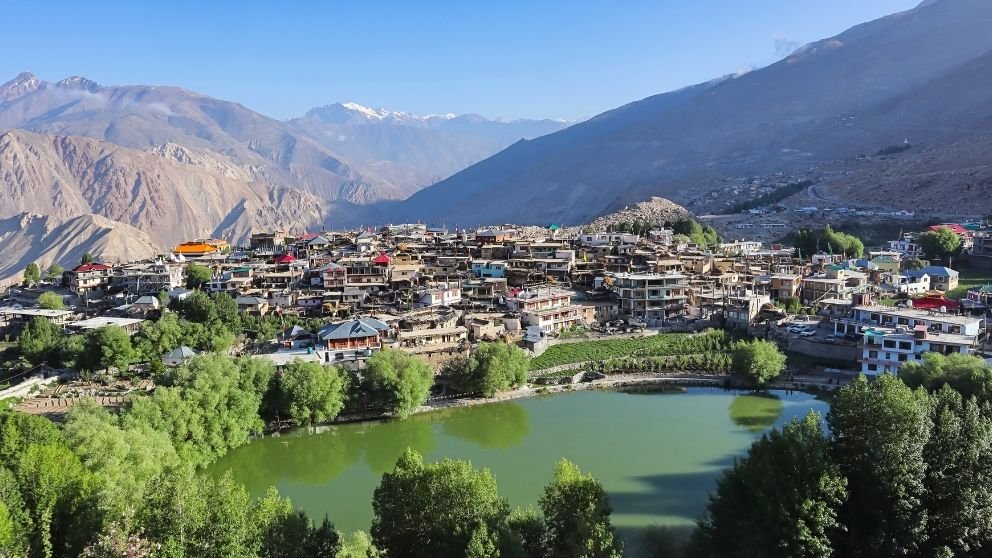
The road to Spiti Valley is filled with places that make you want to stop, put your camera away for a moment and simply enjoy the surroundings. Nako Village is one of those places.
Located high in the mountains of Kinnaur, Nako is a peaceful Himalayan settlement known for its beautiful lake, ancient Buddhist monastery and traditional village life.
At approximately 3,662 metres (12,014 feet) above sea level, Nako feels very different from the greener valleys you pass through earlier in the journey.
The mountains become drier, the roads climb higher and the landscape begins to resemble the cold desert of Spiti.
For travellers heading towards Tabo and Kaza, Nako is often the first real introduction to this extraordinary environment.
Whether you’re planning a motorcycle adventure, a road trip with friends or a relaxed Himalayan holiday, Nako deserves a place on your itinerary.
In this guide, we’ll explore Nako Lake, the ancient monastery, things to do in the village, how to reach Nako, the best time to visit and practical travel tips.
Where Is Nako Village Located?
Nako is a small Himalayan village in the Hangrang Valley of Kinnaur district, Himachal Pradesh.
It is situated close to the India–Tibet border region and is an important destination along the traditional route connecting Kinnaur with Spiti Valley.
Although Nako is geographically part of Kinnaur, it is frequently included in Spiti Valley travel itineraries because of its location between Kalpa and Tabo.
The village is surrounded by barren mountain slopes, traditional agricultural fields and impressive Himalayan scenery.
Unlike larger tourist destinations, Nako has a quiet atmosphere and a relatively simple way of life.
Nako Village at a Glance
| Information | Details |
|---|---|
| Location | Kinnaur, Himachal Pradesh |
| Altitude | Approx. 3,662 metres (12,014 feet) |
| Famous for | Nako Lake and Nako Monastery |
| Distance from Kalpa | Approximately 119 km |
| Distance from Tabo | Around 60–70 km |
| Distance from Kaza | Approximately 110–130 km |
| Best time to visit | May to October |
| Accommodation | Guesthouses and local homestays |
| Ideal duration | 1–2 hours or an overnight stay |
Nako is particularly convenient for travellers following the Shimla–Kinnaur–Spiti Valley route.
Nako Lake: The Heart of the Village
The most famous attraction in Nako is undoubtedly Nako Lake, a small, high-altitude freshwater lake located beside the village.
Unlike the vast lakes you may encounter elsewhere in the Himalayas, Nako Lake is relatively small and surrounded by trees, traditional houses and mountain slopes.
Its charm comes from its peaceful setting rather than its size.
During calm weather, the lake reflects the surrounding mountains, trees and village buildings.
The colours change with the seasons. In warmer months, trees add shades of green to the lakeside scenery, while autumn brings golden and brown tones.
In winter, parts of the lake may freeze as temperatures drop below zero.
What Makes Nako Lake Special?
Nako Lake is more than a photography location.
The lake holds cultural and religious significance for the local community and is associated with Buddhist traditions.
Its location beside the village makes it easily accessible, unlike many Himalayan lakes that require long treks.
You can reach the lakeside within a short walk from most parts of Nako.
The peaceful surroundings make it an ideal place to spend time after a long mountain journey.
Can You Walk Around Nako Lake?
Yes. Visitors can explore the accessible walking paths around the lake and enjoy different views of the water and surrounding village.
The walk is relatively easy, although travellers should still remember that Nako sits at high altitude.
There is no need to rush.
Spend time enjoying the reflections, photographing the landscape or simply sitting quietly beside the water.
Travel tip: Visit the lake early in the morning or during the late afternoon when the light is softer and the surroundings are particularly beautiful.
Is Swimming Allowed in Nako Lake?
Nako Lake is regarded as sacred by the local community, so swimming and bathing should be avoided.
Visitors should also refrain from washing clothes, using soap or leaving any waste near the water.
Preserving the lake is important for both the environment and the people who live nearby.
Nako Monastery: A Thousand Years of Buddhist Heritage
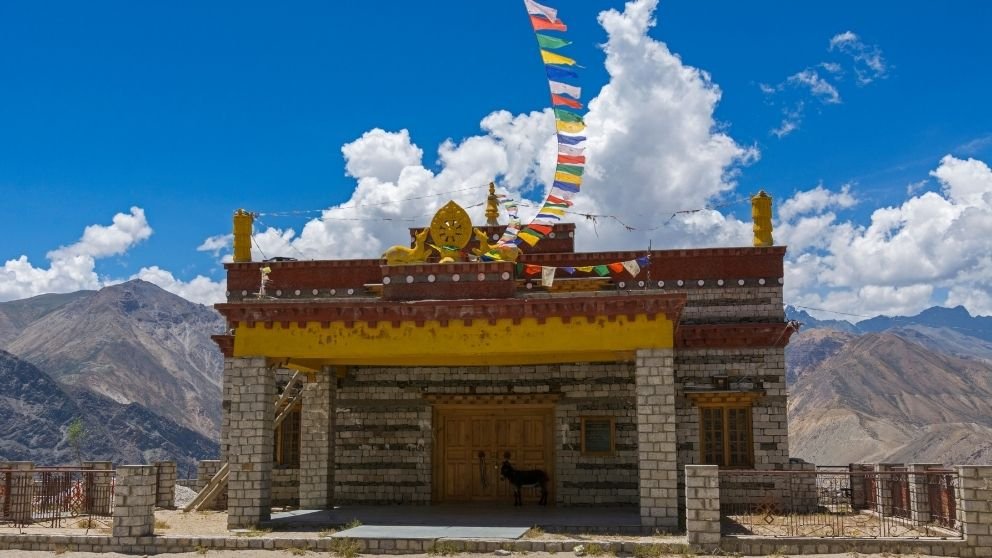
Nako is not only famous for its lake. The village is also home to one of the historically significant Buddhist monastery complexes in the Western Himalayas.
Nako Monastery dates to the 11th century and is traditionally associated with Rinchen Zangpo, a renowned Buddhist scholar and translator.
The monastery complex is known for its ancient architecture, religious artwork and connection with the spread of Buddhism across the Himalayan region.
History of Nako Monastery
The monastery is associated with the period when Buddhist monasteries and religious institutions were being established across parts of the Western Himalayas.
Rinchen Zangpo played an important role in Buddhist scholarship and the translation of religious texts during this period.
The Nako monastery complex contains four historic temples featuring Buddhist imagery and traditional artistic details.
Its murals, sculptures and architectural features offer a glimpse into the region’s religious and cultural history.
What Can You See at Nako Monastery?
Depending on which areas are open to visitors, you may see:
- Ancient Buddhist murals and paintings.
- Traditional religious sculptures.
- Historic temple architecture.
- Prayer spaces and sacred objects.
- Details reflecting Tibetan Buddhist artistic traditions.
Some parts of the monastery are delicate and require careful preservation.
Visitors should avoid touching old paintings or sculptures and follow local guidance about photography.
The monastery is a place of worship, so respectful behaviour is essential.
Things to Do in Nako Village
Nako may be a small settlement, but there are several worthwhile experiences beyond visiting the lake.
1. Explore the Traditional Village Streets
One of the best ways to experience Nako is to walk through its narrow streets.
The village retains elements of traditional Himalayan architecture, with closely built houses, small pathways and buildings designed for the cold mountain climate.
You’ll notice how the settlement blends into the surrounding landscape.
Unlike tourist destinations developed around large hotels and shopping areas, Nako provides a glimpse into everyday village life.
Take your time exploring, but remember that many of the houses and courtyards are private property.
2. Enjoy the Surrounding Mountain Views
The scenery around Nako is quite different from the forests and green hills commonly associated with Himachal Pradesh.
Here, the mountains are dry, rugged and marked by fascinating natural formations.
The colours of the landscape range from pale brown to deep grey, depending on the angle of sunlight.
On clear days, the combination of barren mountains, blue skies and village greenery creates excellent photography opportunities.
3. Visit the Ancient Buddhist Temples
The monastery and smaller religious structures around Nako are important parts of its cultural identity.
Visitors interested in history and Buddhist traditions should allow enough time to explore these places respectfully.
Local customs and access restrictions should always be followed.
4. Experience a Local Homestay
Staying in a local homestay is a rewarding way to experience Nako.
Instead of simply stopping for lunch and continuing towards Tabo, an overnight stay allows you to appreciate the village after most day visitors have left.
Depending on your accommodation, you may enjoy traditional home-cooked meals and conversations with local residents.
Keep in mind that homestay facilities may be basic compared with larger hotels.
5. Enjoy Sunrise or Sunset Near Nako Lake
The lake is especially attractive when the surrounding mountains catch the soft morning or evening light.
If you’re staying overnight, an early morning walk can be one of the most enjoyable moments of your visit.
The village is often quieter, the air feels fresh and the landscape offers an excellent setting for photography.
How to Reach Nako Village
Nako is accessible by road from both the Kinnaur side and the Spiti Valley side, subject to seasonal road conditions.
For most travellers, the route through Shimla and Kinnaur provides a convenient way to reach the village.
Shimla to Nako Village
Route: Shimla → Narkanda → Rampur → Jeori → Karcham → Reckong Peo → Pooh → Khab → Nako
The journey from Shimla is long and involves multiple mountain-road sections.
It is usually more comfortable to break the trip with an overnight stay in the Kinnaur region.
Travellers can explore Kalpa or nearby destinations before continuing towards Nako.
The landscape changes significantly as you move away from the greener regions of Shimla and lower Kinnaur.
Mountains become more barren, valleys grow deeper and the journey gradually enters the Trans-Himalayan environment.
Kalpa to Nako Village
The distance from Kalpa to Nako is approximately 119 kilometres.
The route descends from Kalpa towards the main highway before continuing through upper Kinnaur.
One of the most interesting stretches is near Khab, where the Spiti River meets the Sutlej River.
From the main highway, a branch road climbs towards Nako.
Although the distance may not appear particularly long, mountain-road conditions mean that travellers should allow several hours for the journey.
For motorcycle riders, this route offers dramatic views and an exciting riding experience.
However, narrow roads and occasional rockfall-prone sections require careful riding.
Nako to Tabo
Route: Nako → Chango → Sumdo → Hurling → Tabo
The journey from Nako to Tabo is approximately 60–70 kilometres, depending on the exact route.
As you leave Nako, the landscape becomes increasingly similar to the dry mountain terrain of Spiti Valley.
Tabo is famous for its historic Buddhist monastery, making it an excellent next stop.
Many travellers explore Nako during the morning and continue towards Tabo later in the day.
Nako to Kaza
Kaza is approximately 110–130 kilometres from Nako by road.
The journey passes through Tabo and continues along the Spiti Valley towards Kaza.
Travellers can also explore Dhankar Monastery as a detour before reaching Kaza, depending on their available time.
If you’re planning a relaxed itinerary, it’s better to spend sufficient time at the major attractions rather than trying to cover everything in a single day.
Nako Village on a Spiti Valley Bike Trip
For motorcycle enthusiasts, Nako is an important stop along the Kinnaur–Spiti route.
The ride towards Nako is memorable because of its combination of winding mountain roads, rugged valleys and high-altitude landscapes.
Riders travelling from Shimla gradually experience the change from green Himalayan hills to the cold desert environment associated with Spiti Valley.
This transition is one of the most interesting aspects of the journey.
Why Motorcycle Riders Should Stop at Nako
Nako gives riders an opportunity to take a proper break after travelling through demanding mountain roads.
Instead of stopping only for fuel or food, you can spend time exploring the lake, monastery and village.
It also makes an excellent photography stop, particularly if you’re documenting your Spiti Valley motorcycle adventure.
Important Tips for Riding to Nako
- Check your motorcycle’s tyres, brakes and chain before starting the journey.
- Carry sufficient fuel and don’t rely on finding petrol in every village.
- Ride cautiously on narrow mountain roads.
- Watch for falling rocks and loose gravel.
- Avoid travelling after dark.
- Carry warm clothing and waterproof riding gear.
- Download offline maps before entering areas with limited connectivity.
- Keep enough drinking water and snacks for unexpected delays.
Riders should also remain alert near sections of the highway that are affected by landslides or road construction.
At Spiti Riders, we encourage travellers to enjoy the journey rather than rush between destinations.
Our locally managed Spiti Valley Bike Tour Packages are designed around exploring the region and experiencing the landscapes along the way.
Best Time to Visit Nako Village
Nako experiences a cold, high-altitude climate, with significant seasonal variations.
The best time to visit depends on your interest in sightseeing, photography or motorcycle touring.
April to June: Spring and Early Summer
Spring brings gradually improving weather, although nights remain cold.
By May and June, Nako generally becomes more comfortable for sightseeing.
The surrounding mountains may still have snow at higher elevations.
Travellers should carry warm clothing even during the warmer months.
July to August: Summer Travel Season
July and August are common months for visiting Kinnaur and Spiti.
Although the upper valleys receive less rainfall than many lower Himalayan regions, the approach roads through Kinnaur can be affected by rain, landslides and falling rocks.
Road conditions should be checked before departure.
September to October: Autumn in Nako
September is particularly attractive for travellers who prefer clear mountain views and quieter surroundings.
Autumn colours around the lake can make Nako especially beautiful.
October becomes noticeably colder, especially at night.
For photography and scenic road trips, September and early October can be rewarding months.
November to March: Winter Conditions
Winter in Nako is extremely cold.
Snowfall, freezing temperatures and icy roads can make travel challenging.
The village remains inhabited, but tourism services and road access may be limited.
Winter visitors should plan carefully and confirm local conditions before travelling.
Overall, May through October is the most practical period for visiting Nako, with June and September particularly appealing for motorcycle journeys.
Where to Stay in Nako Village
Nako offers a selection of small guesthouses, homestays and basic hotels.
Accommodation is generally simpler than in larger destinations such as Shimla or Manali.
Travellers can expect modest rooms, local hospitality and beautiful mountain surroundings.
Some accommodation options are located within walking distance of Nako Lake.
Should You Stay in Nako or Tabo?
Both destinations are excellent stops along the Spiti route, but they offer slightly different experiences.
Stay in Nako if:
- You want to spend more time around the lake.
- You’re interested in traditional village life.
- You prefer a peaceful overnight stop.
- Your itinerary allows for a slower journey.
Stay in Tabo if:
- You want to explore Tabo Monastery in more detail.
- You’re continuing towards Dhankar and Kaza the following day.
- You prefer to cover additional distance before stopping.
Either destination can work well depending on your overall itinerary.
Because Nako is at high altitude, overnight stays should be planned with appropriate acclimatisation in mind.
Places to Visit Near Nako Village
Several interesting destinations can be included in the same Kinnaur–Spiti journey.
1. Khab Sangam
Khab is known for the confluence of the Sutlej and Spiti rivers.
The surrounding landscape features dramatic mountain slopes and deep valleys.
It is one of the most interesting geographical landmarks along the road towards Nako.
2. Tabo Monastery
Tabo Monastery is one of the most important Buddhist heritage sites in Spiti Valley.
Famous for its ancient murals, sculptures and religious history, it is an excellent destination for travellers interested in Himalayan culture.
3. Gue Village
Gue, also written as Giu, is known for the naturally preserved mummy of a Buddhist monk.
The village can be visited as a detour from the main route between Sumdo and Tabo, subject to road conditions.
4. Dhankar Monastery
Dhankar Monastery is dramatically positioned on a rocky cliff overlooking the Spiti Valley.
Travellers continuing towards Kaza can include Dhankar in their itinerary.
The nearby Dhankar Lake trek is another attraction for those who are properly acclimatised and have enough time.
5. Kalpa
Kalpa is known for its traditional Kinnauri atmosphere and views of the Kinnaur Kailash mountain range.
It is a popular overnight destination for travellers approaching Nako from the Shimla side.
Suggested Spiti Valley Itinerary Including Nako
If you’re planning a longer journey through Spiti Valley, Nako can be included naturally in your route.
Here is an example of an eight-day circuit during the appropriate travel season.
| Day | Suggested Route |
|---|---|
| Day 1 | Shimla to Sangla |
| Day 2 | Sangla to Kalpa via Chitkul |
| Day 3 | Kalpa to Nako and Tabo |
| Day 4 | Tabo to Kaza via Dhankar |
| Day 5 | Explore Kaza, Key Monastery and Kibber |
| Day 6 | Explore Langza, Hikkim and Komic |
| Day 7 | Kaza to Chandratal via Kunzum Pass |
| Day 8 | Chandratal to Manali |
This is an illustrative route, not a guaranteed daily operating plan. The Chandratal and Manali sections are seasonal, and the exact itinerary should account for road conditions, acclimatisation and group riding pace.
If you’re visiting when Kunzum Pass is closed, a return journey through Kinnaur may be more suitable.
You can also read our Spiti Valley Itinerary for 5 Days for a shorter travel-planning guide.
Important Things to Know Before Visiting Nako
A little preparation can make your visit considerably more comfortable.
High-Altitude Acclimatisation
At over 3,600 metres, Nako is high enough for altitude sickness to be a concern.
Travellers should avoid rapid elevation gain, particularly if planning an overnight stay.
Symptoms such as headache, dizziness, nausea and unusual fatigue should not be ignored.
If symptoms of altitude sickness develop, do not ascend further. Seek appropriate medical advice and descend if symptoms worsen.
Mobile Network and Internet
Connectivity can be unreliable in upper Kinnaur.
Some networks may work in certain areas, but travellers should not depend on continuous internet access.
Download maps and important travel information before departure.
Fuel and Supplies
Fuel stations become less frequent as you travel towards upper Kinnaur and Spiti.
Refuel at a reliable station before entering remote stretches.
Carry sufficient water, snacks and any essential medication.
Permits for Foreign Travellers
Nako falls within a border-sensitive region.
Foreign nationals may require a Protected Area Permit for travel through designated areas of Kinnaur.
Permit rules, eligibility and procedures should be confirmed with the relevant authorities before travelling.
Indian travellers should carry valid government-issued identification and follow any applicable local restrictions.
Responsible Tourism
Nako is a living village, not simply a tourist attraction.
Respect local customs and private property.
Avoid littering around the lake and monastery.
Do not disturb religious structures or remove objects from heritage sites.
Supporting local homestays and businesses can help ensure that tourism benefits the community.
Frequently Asked Questions About Nako Village
1. Where is Nako Village located?
Nako Village is located in the Hangrang Valley of Kinnaur district, Himachal Pradesh, along the route connecting Kinnaur and Spiti Valley.
2. What is Nako Village famous for?
Nako is famous for its scenic high-altitude lake, historic Buddhist monastery, traditional village architecture and beautiful Himalayan surroundings.
3. What is the altitude of Nako Village?
Nako is located at approximately 3,662 metres (12,014 feet) above sea level.
4. Is Nako in Kinnaur or Spiti Valley?
Nako is officially part of Kinnaur district. However, it is commonly included in Spiti Valley travel itineraries because of its location along the route to Tabo and Kaza.
5. How far is Nako from Kalpa?
Nako is approximately 119 kilometres from Kalpa by road. Travel time varies depending on road conditions and stops.
6. How far is Nako Lake from the village?
Nako Lake is located beside the main village and can be reached on foot from most areas of the settlement.
7. Is Nako Village worth visiting?
Yes. Nako is worth visiting for its peaceful lake, Buddhist heritage, traditional Himalayan atmosphere and beautiful mountain scenery.
8. Can we stay overnight in Nako?
Yes. Nako has basic homestays, guesthouses and small hotels. However, travellers should consider altitude acclimatisation before planning an overnight stay.
9. Can we visit Nako Village in winter?
Nako remains inhabited in winter, but snowfall, freezing temperatures and road conditions can make travel difficult. Access should be confirmed before planning a trip.
10. Can Nako be visited during a Spiti Valley bike trip?
Yes. Nako is a popular stop on motorcycle routes entering Spiti Valley through Shimla and Kinnaur. Riders commonly visit it while travelling between Kalpa and Tabo.
Final Thoughts: Why Nako Deserves a Stop on Your Spiti Journey
Nako Village is a reminder that some of the most memorable places in the Himalayas are not the largest or most famous destinations.
A small lake, a historic monastery and a quiet mountain village may not sound particularly adventurous compared with crossing high mountain passes.
But the experience of reaching Nako after riding through the dramatic roads of Kinnaur is something special.
The contrast between the rocky mountains and peaceful lake makes the village stand out.
For travellers heading towards Spiti, Nako offers an opportunity to slow down before continuing into the heart of the valley.
Whether you spend an hour walking around the lake or stay overnight in a local homestay, Nako adds a meaningful cultural and scenic experience to your journey.
Planning a Spiti Valley Motorcycle Adventure?
At Spiti Riders, we’re a locally operated team that manages our tours directly, with a focus on exploring the region’s mountain roads, villages and cultural attractions.
Discover our Spiti Valley Bike Tour Packages and start planning a Himalayan journey that includes places like Nako, Tabo, Dhankar, Kaza and beyond.
Spiti Riders — Ride Beyond the Ordinary.