
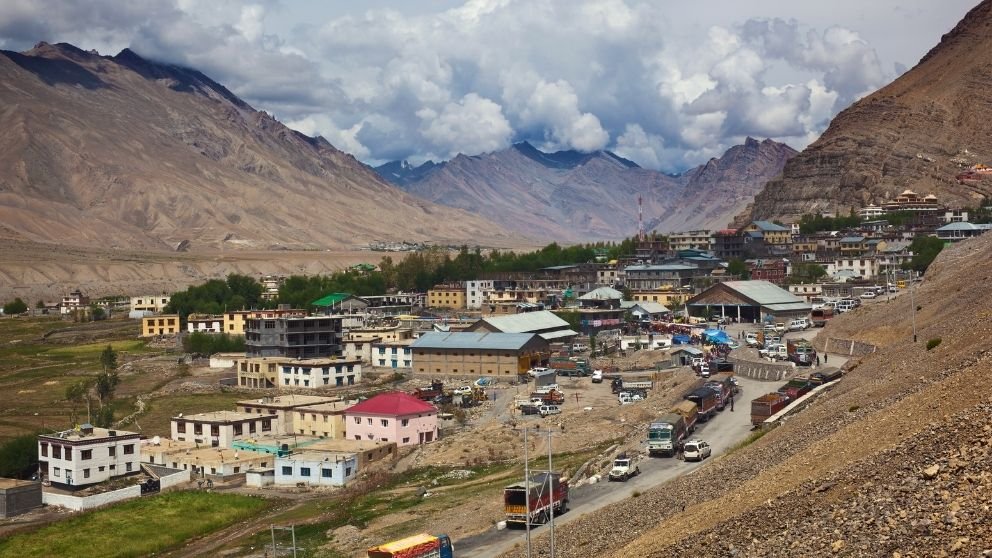
There is something special about arriving in Kaza after spending days travelling through the winding mountain roads of Himachal Pradesh.
The green forests gradually disappear, the mountains become enormous and barren, and the landscape begins to look completely different from the rest of the state.
Then, surrounded by the rugged Himalayan mountains and the wide Spiti River valley, you reach a small town that serves as the heart of Spiti.
Welcome to Kaza, the main town and administrative centre of Spiti Valley.
Located at approximately 3,650 metres (11,975 feet) above sea level, Kaza is one of the most important destinations for travellers exploring Spiti Valley.
It is the main starting point for visiting famous attractions such as Key Monastery, Kibber Village, Chicham Bridge, Langza, Hikkim and Komic.
Unlike the smaller villages scattered throughout Spiti, Kaza offers hotels, restaurants, markets, a petrol station and other essential facilities.
For motorcycle riders, it is also an important place to refuel, check their motorcycles and prepare for the next stage of their Himalayan adventure.
In this guide, we’ll explore everything you need to know about Kaza, including its location, history, famous tourist attractions, routes from Shimla and Manali, best time to visit, accommodation and useful travel tips.
Where Is Kaza Located?
Kaza is located in the Lahaul and Spiti district of Himachal Pradesh, in the heart of Spiti Valley.
Situated beside the Spiti River, the town is surrounded by towering barren mountains, traditional villages and dramatic Himalayan landscapes.
Kaza serves as the sub-divisional headquarters of Spiti and is the largest commercial centre in the valley.
Despite its remote location, it provides many of the facilities travellers need before exploring the higher villages.
Kaza at a Glance
| Information | Details |
|---|---|
| Location | Spiti Valley, Himachal Pradesh |
| Altitude | Approximately 3,650 metres (11,975 feet) |
| District | Lahaul and Spiti |
| Famous for | Mountain landscapes, monasteries and high-altitude villages |
| Distance from Shimla | Approximately 412 km |
| Distance from Manali | Around 180–200 km via the summer route |
| Distance from Key Monastery | Approximately 12 km |
| Distance from Kibber | Approximately 16–20 km |
| Best time to visit | May to October; June–September for the full circuit |
| Recommended stay | 2–3 nights |
| Accommodation | Hotels, guesthouses and homestays |
Kaza is connected to the rest of Himachal Pradesh through two main routes: one via Shimla and Kinnaur, and the other via Manali and Kunzum Pass.
The route you choose depends heavily on the season.
Why Is Kaza Famous?
Kaza is not famous for just one attraction.
Its importance comes from its location, cultural heritage and role as the main gateway to several of Spiti Valley’s most remarkable destinations.
For many travellers, Kaza becomes the place where they spend a few nights, explore nearby villages and experience the daily life of Spiti.
The Heart of Spiti Valley
Kaza is an important centre for local trade, transportation and administrative activities.
The town has a marketplace where visitors can find restaurants, small shops, local products and essential supplies.
Compared with remote villages such as Komic and Langza, Kaza feels relatively active.
However, the atmosphere remains peaceful compared with major tourist destinations like Manali or Shimla.
A Gateway to High-Altitude Villages
Some of Spiti Valley’s most famous villages are located within a relatively short driving distance from Kaza.
These include Langza, Hikkim, Komic, Kibber and Chicham.
Each village offers a different experience, from Buddhist monasteries and traditional architecture to mountain scenery and high-altitude rural life.
An Important Stop for Motorcycle Travellers
For riders exploring the Himalayas, Kaza is particularly valuable because of its fuel station and access to essential services.
After travelling through Kinnaur or crossing the difficult roads near Kunzum Pass, riders often use Kaza as a base to rest and prepare for the journey ahead.
Best Places to Visit in Kaza and Nearby
Kaza itself is relatively small, but the surrounding area contains some of Spiti Valley’s most popular attractions.
Spending two or three nights in Kaza gives you enough time to explore several destinations without constantly changing accommodation.
1. Key Monastery – The Iconic Monastery of Spiti Valley
Located approximately 12 kilometres from Kaza, Key Monastery, also known as Ki or Kye Monastery, is one of Spiti Valley’s most recognisable landmarks.
The monastery sits on a rocky hill overlooking the valley.
Its whitewashed buildings appear stacked one above another, creating an impressive architectural structure against the surrounding mountains.
Key Monastery is an important centre of Tibetan Buddhism and is known for its religious paintings, manuscripts, prayer halls and monastic traditions.
The monastery offers an excellent opportunity to learn about the cultural and spiritual heritage of Spiti Valley.
The surrounding viewpoints are also popular among photographers.
Travel tip: Visit during the morning when the light is pleasant and allow enough time to explore the monastery respectfully.
2. Kibber Village – Traditional Life at High Altitude
Kibber is a beautiful Himalayan village located approximately 16–20 kilometres from Kaza.
Situated above 4,000 metres, it is known for its traditional houses, agricultural fields and surrounding mountain landscapes.
Kibber is also associated with Kibber Wildlife Sanctuary, which provides habitat for Himalayan wildlife, including the elusive snow leopard.
During the summer, the village offers a peaceful setting with cultivated fields contrasting against the barren mountains.
For travellers interested in local culture and photography, Kibber is an excellent destination.
3. Chicham Bridge – A Remarkable Himalayan Engineering Landmark
A short drive beyond Kibber brings you to Chicham Bridge.
The bridge connects Kibber and Chicham villages across a deep Himalayan gorge.
Located at approximately 4,145 metres above sea level, it is one of the most remarkable high-altitude bridges in the region.
Before the bridge was completed, crossing directly between the two villages was considerably more difficult.
Today, the bridge provides an important road connection and has become a popular sightseeing attraction.
Its dramatic location makes it particularly attractive for motorcycle travellers.
Important: Never stop your motorcycle in the middle of the bridge for photographs. Use a safe parking location away from traffic.
4. Langza Village – The Village of Fossils
Langza is among the most fascinating villages near Kaza.
It is famous for its enormous Buddha statue overlooking the Himalayan mountains.
The statue, with the surrounding mountain scenery, has become one of Spiti Valley’s most recognisable photography locations.
Langza is also known for marine fossils found in the surrounding geological formations.
These fossils are evidence that the rocks of the region formed in ancient marine environments.
Visitors should appreciate and photograph the fossils without removing or damaging them.
The village offers beautiful views of the surrounding mountains and an opportunity to experience traditional Himalayan life.
5. Hikkim Village – The Famous High-Altitude Post Office
Hikkim is a small village near Kaza, best known for its high-altitude post office.
Travellers often visit to send postcards to friends and family from this remote Himalayan destination.
Sending a postcard from Hikkim has become a popular activity during Spiti Valley trips.
However, postal operations and opening hours can vary, so services may not always be available.
The drive to Hikkim also offers spectacular views of the surrounding cold-desert landscape.
6. Komic Village – A Settlement Above 15,000 Feet
Komic, also spelled Komik, is one of the most famous high-altitude villages in Spiti Valley.
Located at approximately 4,587 metres, the village is often promoted as one of the highest inhabited settlements connected by a motorable road.
Komic is known for its traditional village life and historic Tangyud Monastery.
The surrounding landscape is particularly beautiful, with open mountain views and very little commercial development.
The journey from Kaza to Komic is a popular motorcycle excursion.
However, the high altitude means visitors should be properly acclimatised before travelling there.
7. Dhankar Monastery and Lake
Dhankar is located approximately 32 kilometres from Kaza.
The historic monastery stands dramatically on a rocky cliff overlooking the surrounding Spiti Valley.
It was historically associated with the traditional rulers of Spiti and remains an important cultural destination.
Above the village lies Dhankar Lake, accessible through an uphill trek.
The lake offers peaceful mountain views, but the climb can be demanding because of the altitude.
Travellers who wish to explore both the monastery and lake should allow enough time and avoid attempting the trek without proper acclimatisation.
8. Pin Valley
Pin Valley is an excellent destination for travellers who want to explore beyond the popular villages around Kaza.
The valley is known for its remote settlements, distinctive landscapes and Pin Valley National Park.
Unlike the wider Spiti Valley, some parts of Pin Valley feature greener fields and a different mountain environment.
Mud Village and Kungri Monastery are among the destinations travellers may include.
Pin Valley is particularly attractive for nature lovers, photographers and visitors interested in quieter Himalayan villages.
A dedicated day trip is preferable if you want to experience the valley properly.
Things to Do in Kaza Town
Although most travellers use Kaza as a base for nearby sightseeing, the town itself has several interesting experiences.
Explore Kaza Market
Kaza Market is one of the most active areas in the town.
Here, you’ll find small restaurants, cafés, shops selling everyday necessities and businesses catering to travellers.
It is a good place to buy snacks, refill supplies or enjoy a relaxed meal after a long day of riding.
You may also find locally made handicrafts, warm clothing and souvenirs.
The market is relatively small, but it provides a glimpse into the everyday commercial life of Spiti Valley.
Visit Sakya Tangyud Monastery in Kaza
Kaza is home to a modern Sakya Buddhist monastery, distinct from the older Tangyud Monastery near Komic Village.
Its colourful architecture makes it an interesting attraction within the town itself.
Travellers can visit the accessible areas, observe the traditional religious design and experience a peaceful atmosphere.
As with other monasteries in Spiti, visitors should respect religious customs and ask permission before taking photographs inside.
Walk Through Old Kaza
Old Kaza, also known as Kaza Khas, retains a more traditional village atmosphere.
Walking through the older streets allows visitors to observe local houses, narrow pathways and elements of traditional architecture.
This is an enjoyable activity for travellers who want to explore the town beyond its main market.
Take your time and respect private property and local residents.
Try Traditional Spitian Food
Food is another interesting part of visiting Kaza.
Several small restaurants and local eateries serve dishes influenced by Tibetan and Himalayan traditions.
Depending on the establishment, you may find:
- Thukpa, a warming noodle soup.
- Momos, steamed dumplings with different fillings.
- Thenthuk, a traditional hand-pulled noodle soup.
- Tingmo, a soft steamed bread.
- Local barley-based preparations.
- Butter tea and other traditional beverages.
After spending several hours exploring the cold mountain roads, a hot meal in Kaza feels especially satisfying.
Enjoy the Mountain Views
One of the simplest things to do in Kaza is appreciate the surrounding landscape.
The town sits in a wide Himalayan valley, with enormous rocky mountains extending in every direction.
The scenery changes throughout the day as sunlight moves across the mountain slopes.
Early mornings and late afternoons are especially attractive for photography.
You don’t always need to visit a famous viewpoint to enjoy Spiti’s natural beauty.
Sometimes, sitting outside your accommodation and watching the mountains is enough.
How to Reach Kaza from Shimla
The Shimla–Kinnaur route is one of the most popular approaches to Spiti Valley.
It allows travellers to experience the gradually changing landscapes of Himachal Pradesh before reaching Kaza.
Shimla to Kaza Route
Shimla → Narkanda → Rampur → Karcham → Kalpa → Nako → Tabo → Kaza
The total road distance is approximately 412 kilometres, depending on the exact route and sightseeing detours.
The journey begins in the greener mountains of Shimla and gradually follows the Sutlej Valley into Kinnaur.
As you travel towards Nako and Tabo, the landscape becomes increasingly dry and rugged.
The transition from forests and orchards to the cold-desert environment of Spiti is one of the most interesting parts of the journey.
How Many Days Are Needed?
Although the journey can be completed relatively quickly under favourable conditions, spreading it over two or three days is usually more comfortable.
Travellers commonly stop in Sangla, Kalpa, Nako or Tabo along the way.
A gradual journey also provides more opportunities to adjust to increasing altitude.
Is the Shimla to Kaza Road Open Throughout the Year?
The Shimla–Kinnaur road is considered the primary approach to Spiti during much of the year.
However, this does not mean it remains continuously open.
Snowfall, landslides, rockfall and other weather-related problems can temporarily block the route.
Always check the latest conditions before travelling, especially during winter and the monsoon season.
How to Reach Kaza from Manali
The Manali route offers a shorter but more challenging approach to Kaza.
It is particularly popular among motorcycle riders during the summer season.
Manali to Kaza Route
Manali → Atal Tunnel → Gramphu → Chhatru → Batal → Kunzum Pass → Losar → Kaza
The road distance is approximately 180–200 kilometres, depending on the starting point and route.
The journey passes through the rugged Chandra Valley before climbing towards Kunzum Pass.
At approximately 4,551 metres, Kunzum Pass is one of the most memorable high-altitude crossings in Himachal Pradesh.
After crossing the pass, travellers descend towards Losar and continue into Spiti Valley.
Why Is the Manali Route Challenging?
The section between Gramphu and Batal is particularly demanding.
Parts of the road may have loose stones, broken surfaces, narrow tracks and water crossings.
Travel can be slow even when the total distance appears short.
Motorcycle riders should be comfortable handling rough terrain and unpredictable road conditions.
When Does the Manali to Kaza Road Open?
The Manali–Kaza road through Kunzum Pass is a seasonal route.
It usually becomes accessible during summer after snow clearance and closes again when winter snow makes the pass unsafe.
The opening period varies each year.
Travellers should not assume that the route is open in May or early June simply because other roads around Manali are accessible.
Best Time to Visit Kaza
Kaza offers different experiences throughout the year.
The best time depends on your travel route, the kind of experience you want and the attractions you plan to visit.
March to April – A Quieter Side of Spiti
March and April are suitable for travellers specifically seeking cold-weather conditions and quieter Himalayan landscapes.
The town can still experience freezing temperatures and snowfall.
Road access from the Kinnaur side may be possible, depending on weather and local conditions.
However, Kunzum Pass and Chandratal Lake are generally inaccessible during this period.
These months are better suited to carefully planned winter or early-spring itineraries rather than the complete summer circuit.
May to June – Spring and Early Summer
May and June bring improving weather to Spiti Valley.
The mountains may still have snow at higher elevations, while conditions around Kaza gradually become more comfortable.
This is a beautiful period for exploring monasteries, villages and the surrounding landscapes.
However, the Manali–Kaza route may not open until later in the season.
Travellers should verify Kunzum Pass accessibility separately.
July to August – Summer Adventure Season
July and August are popular months for Spiti Valley road trips and motorcycle tours.
When the roads are open, travellers can explore the full circuit, including Kunzum Pass and Chandratal Lake.
The high-altitude villages around Kaza are generally more accessible during favourable weather.
However, heavy rainfall in Kinnaur and Lahaul can cause landslides and road disruptions, even though Spiti itself receives relatively little monsoon rainfall.
September – Clear Skies and Beautiful Landscapes
September is an excellent month for exploring Kaza.
The skies can be clear, the landscapes look spectacular and the weather is often suitable for daytime sightseeing.
It is particularly attractive for photography and motorcycle touring.
However, the mornings and evenings can be cold, so proper clothing remains essential.
October to February – Cold Weather and Winter Conditions
From October onwards, temperatures begin dropping significantly.
Snowfall may affect higher roads, while accommodation and tourism services become more limited.
During the winter months, Kaza experiences extreme cold, and travel can be difficult.
The Manali route remains closed for much of this period.
Winter travel should only be planned with reliable local support and sufficient flexibility.
For most visitors, June to September is the most convenient period to explore Kaza and its surrounding attractions.
Where to Stay in Kaza
Kaza offers a wider range of accommodation than most nearby villages.
Visitors can choose from hotels, guesthouses, hostels and locally operated homestays.
Accommodation ranges from simple budget rooms to more comfortable properties catering to tourists.
Hotels in Kaza
Hotels can be a convenient option for travellers who want private rooms, attached bathrooms and easy access to restaurants or the market.
Facilities vary, particularly when it comes to heating and hot water.
Confirm the actual inclusions before booking.
Homestays in Kaza
Homestays offer an opportunity to experience local hospitality.
Some provide traditional meals and a quieter environment away from the busiest parts of town.
Staying with local families can also help travellers learn more about Spiti’s culture and daily life.
Should You Stay in Kaza or Kibber?
Kaza is generally the more practical choice for travellers who want restaurants, fuel and access to multiple sightseeing routes.
Kibber offers a quieter village experience but has fewer facilities and sits at a higher altitude.
For first-time visitors, staying in Kaza and exploring Kibber as a day trip is often the more convenient arrangement.
How Many Nights Should You Stay in Kaza?
We recommend planning approximately two to three nights if you want to explore the surrounding area comfortably.
This gives you time to visit the Key–Kibber–Chicham route and the Langza–Hikkim–Komic circuit without rushing.
It also allows some flexibility for rest and weather-related changes.
Kaza on a Spiti Valley Bike Trip
For motorcycle enthusiasts, reaching Kaza is often one of the defining moments of a Spiti Valley adventure.
After riding through the mountain roads of Kinnaur or crossing the rugged terrain near Kunzum Pass, arriving in Kaza feels rewarding.
The town provides an opportunity to rest, refuel and explore the surrounding destinations.
Why Kaza Is Important for Riders
Kaza has a petrol station, making it an essential refuelling point for motorcycles travelling through the region.
It also offers access to essential supplies and local vehicle-related services, although specialised motorcycle parts may not always be available.
Riders should inspect their motorcycles before leaving Kaza for remote villages or long stretches towards Kunzum Pass.
Best Motorcycle Routes Around Kaza
Some of the most enjoyable motorcycle rides around Kaza include:
Route 1: Kaza → Key Monastery → Kibber → Chicham Bridge → Kaza
An excellent route for exploring Buddhist heritage, traditional villages and the dramatic Chicham gorge.
Route 2: Kaza → Langza → Komic → Hikkim → Kaza
A scenic high-altitude circuit offering spectacular mountain landscapes and famous remote villages.
Route 3: Kaza → Dhankar → Tabo → Kaza
A route focused on Spiti’s historic monasteries and cultural attractions.
Route 4: Kaza → Losar → Kunzum Pass → Chandratal
A challenging seasonal route best suited to riders who are comfortable with rough mountain roads and changing weather.
Motorcycle Riding Tips for Kaza
- Refuel before heading towards remote villages.
- Check motorcycle brakes, tyres and chain condition.
- Carry warm protective riding gear.
- Download offline maps before travelling.
- Avoid riding after sunset.
- Keep enough drinking water and snacks.
- Allow extra time for rough road sections.
- Avoid unnecessary overtaking on narrow mountain roads.
- Never attempt an unsafe water crossing.
- Check local road conditions before departing for Kunzum Pass.
At Spiti Riders, we believe a Himalayan motorcycle adventure should be about experiencing the region rather than simply covering kilometres.
Our locally managed Spiti Valley Bike Tour Packages are designed to help riders explore the mountain roads, monasteries and remote villages of Spiti with planned routes and on-road support.
Suggested Two-Day Kaza Sightseeing Itinerary
If you’re planning to spend two full days exploring Kaza and nearby villages, this itinerary provides a good starting point.
Day 1: Key Monastery, Kibber and Chicham Bridge
Route: Kaza → Key Monastery → Kibber → Chicham Bridge → Kaza
Start with a relaxed breakfast before visiting Key Monastery.
Spend time exploring the monastery and enjoying its mountain views.
Continue towards Kibber Village, where you can experience traditional village life.
Afterwards, visit Chicham Bridge and the surrounding gorge.
Return to Kaza in the afternoon or evening.
This route offers a combination of sightseeing, culture and scenic riding without requiring an extremely long journey.
Day 2: Langza, Komic and Hikkim
Route: Kaza → Langza → Komic → Hikkim → Kaza
Begin the day by travelling towards Langza Village.
Visit the large Buddha statue and enjoy the views of the surrounding mountains.
Continue towards Komic to explore Tangyud Monastery and the high-altitude village landscape.
On the return journey, stop at Hikkim to visit its famous post office if it is operating.
Return to Kaza and spend the evening exploring the market or enjoying a local meal.
Important: The high villages are significantly higher than Kaza. Travellers should be sufficiently acclimatised and should not undertake these excursions if they have altitude-related symptoms.
Suggested 8-Day Spiti Valley Bike Trip Including Kaza
For travellers planning a complete summer motorcycle circuit, Kaza naturally becomes one of the main stops.
| Day | Suggested Route |
|---|---|
| Day 1 | Shimla to Sangla |
| Day 2 | Sangla, Chitkul and Kalpa |
| Day 3 | Kalpa to Nako and Tabo |
| Day 4 | Tabo to Dhankar and Kaza |
| Day 5 | Kaza, Key Monastery, Kibber and Chicham Bridge |
| Day 6 | Kaza, Langza, Hikkim and Komic |
| Day 7 | Kaza to Chandratal via Losar and Kunzum Pass |
| Day 8 | Chandratal to Manali via Batal and Gramphu |
This is a suggested summer itinerary. It assumes the Kunzum and Chandratal roads are officially open.
Travellers visiting during the colder months should plan routes that avoid these seasonal sections.
If you have additional time, Pin Valley is another excellent destination to include.
You can also explore our Spiti Valley Itinerary for 5 Days for a shorter road-trip planning guide.
Kaza Altitude: Important Health and Acclimatisation Tips
Kaza is situated at approximately 3,650 metres above sea level.
At this altitude, the amount of oxygen available to the body is lower than at sea level.
Travellers arriving rapidly from lower elevations may develop symptoms of acute mountain sickness.
Common symptoms include:
- Headache
- Dizziness
- Nausea
- Unusual tiredness
- Loss of appetite
- Difficulty sleeping
Even physically fit travellers can experience altitude sickness.
How to Acclimatise in Kaza
Allow time for your body to adjust before travelling to higher villages.
Avoid strenuous exercise immediately after a rapid ascent.
Stay adequately hydrated, eat regular meals and avoid alcohol during initial acclimatisation.
If you develop symptoms of altitude sickness, do not continue ascending.
Worsening symptoms require descent and medical assessment.
Confusion, difficulty walking or breathlessness at rest are medical emergencies that require urgent care.
Kaza has a community health centre, but medical resources in remote Himalayan regions are limited.
If you have an existing heart or lung condition, speak with a medical professional experienced in high-altitude travel before your trip.
Important Travel Tips Before Visiting Kaza
Mobile Network and Internet
Mobile connectivity has improved in some parts of Spiti Valley, but coverage can still be unreliable.
The availability of a signal depends on the network provider, location and weather.
Download offline maps and keep important contact information available before travelling.
Petrol Availability
Kaza is a major refuelling point in Spiti Valley.
Travellers should not depend on regular fuel availability in smaller villages such as Komic, Langza or Losar.
Always refill before beginning longer remote routes.
ATMs and Cash
Kaza has banking and ATM facilities, but cash availability and network connectivity can occasionally be unreliable.
Carry enough cash for accommodation, meals and unexpected expenses.
Medical Facilities
Basic medical assistance is available in Kaza.
However, more advanced medical treatment may require transportation outside the region.
Carry personal medication and essential travel supplies.
Permits for International Travellers
Certain protected or border-sensitive areas of Himachal Pradesh are subject to permit requirements for foreign nationals.
Requirements may depend on nationality, route and the areas being visited.
International travellers should confirm the latest Protected Area Permit rules with the relevant authorities before travelling.
Respect Local Culture
Spiti Valley has a rich Buddhist cultural heritage.
Dress respectfully when visiting monasteries, follow photography restrictions and avoid disturbing religious activities.
Remember that villages such as Langza, Kibber and Komic are living communities rather than tourist attractions alone.
Responsible Tourism
Avoid leaving plastic waste behind, use refillable water bottles when practical and respect fragile mountain environments.
Supporting local homestays, restaurants and guides helps tourism benefit the communities of Spiti Valley.
Frequently Asked Questions About Kaza
1. Where is Kaza located?
Kaza is located in the Lahaul and Spiti district of Himachal Pradesh. It is the main administrative and commercial town of Spiti Valley.
2. What is the altitude of Kaza?
Kaza is situated at approximately 3,650 metres (11,975 feet) above sea level.
3. What is Kaza famous for?
Kaza is famous for its beautiful Himalayan landscapes, Buddhist heritage and access to destinations such as Key Monastery, Kibber, Chicham Bridge, Langza, Hikkim and Komic.
4. What are the best places to visit near Kaza?
Popular attractions include Key Monastery, Kibber Village, Chicham Bridge, Langza, Komic, Hikkim, Dhankar Monastery and Pin Valley.
5. How far is Kaza from Shimla?
Kaza is approximately 412 kilometres from Shimla via Kinnaur. The distance varies slightly depending on the route and sightseeing detours.
6. How far is Kaza from Manali?
Kaza is approximately 180–200 kilometres from Manali via the Atal Tunnel, Gramphu and Kunzum Pass route.
7. Is Kaza accessible throughout the year?
Kaza may be accessible from the Shimla–Kinnaur side during much of the year, depending on road conditions. The Manali route through Kunzum Pass normally closes during winter.
8. What is the best month to visit Kaza?
June and September are particularly attractive for sightseeing and motorcycle touring. July and August are also popular, although approach roads can be affected by monsoon-related disruptions.
9. How many days are enough for Kaza?
Two to three nights are recommended for exploring Kaza and its nearby attractions comfortably. Travellers who want to explore Pin Valley or spend more time in the villages may prefer a longer stay.
10. Can we visit Kaza by motorcycle?
Yes. Kaza is a popular destination for motorcycle travellers. However, the surrounding Himalayan roads require careful preparation, suitable riding equipment and experience with mountain conditions.
11. Is there a petrol pump in Kaza?
Yes. Kaza has a petrol station and is an important refuelling location for riders travelling through Spiti Valley.
12. Is Kaza safe for first-time travellers?
Kaza is a well-established travel base, but visitors must account for high altitude, remote road conditions and limited medical facilities. Proper acclimatisation and realistic travel planning are essential.
13. Can we visit Kaza in December or January?
Travel may be possible through the Kinnaur route when roads are open, but extreme cold, snowfall and limited services make winter journeys challenging. The Manali route through Kunzum Pass is generally inaccessible.
14. Can we visit Chandratal Lake from Kaza?
Yes, during the summer season when Kunzum Pass and the Chandratal approach road are open. The lake is approximately 100 kilometres from Kaza by road to its access area, followed by a short walk.
15. Is Kaza worth visiting during a Spiti Valley trip?
Absolutely. Kaza is one of the most practical bases for exploring Spiti Valley and offers access to several of the region’s most memorable monasteries, villages and scenic routes.
Final Thoughts: Why Kaza Is the Heart of Spiti Valley
Kaza may not have the luxury resorts or busy tourist streets found in larger Himalayan towns, but that is precisely part of its appeal.
It offers something different.
Enormous mountains, peaceful village life, Buddhist monasteries, beautiful high-altitude roads and the opportunity to experience one of India’s most distinctive regions.
For travellers exploring Spiti Valley, Kaza is much more than an overnight stop.
It is the gateway to the remote villages, cultural attractions and mountain landscapes that make the region extraordinary.
From Key Monastery and Kibber to Komic, Langza and Chicham Bridge, some of Spiti’s best experiences begin in Kaza.
For motorcycle riders, it is also a place to rest, refuel and prepare for the next stage of the Himalayan journey.
Planning Your Spiti Valley Bike Trip?
At Spiti Riders, we’re a locally operated motorcycle tour team that manages our trips directly rather than simply forwarding bookings to third-party travel companies.
Our guided adventures combine carefully planned routes, local knowledge, reliable motorcycles and on-road support.
Explore our Spiti Valley Bike Tour Packages and start planning your journey through Kinnaur and Spiti Valley.
Spiti Riders — Ride Beyond the Ordinary.