
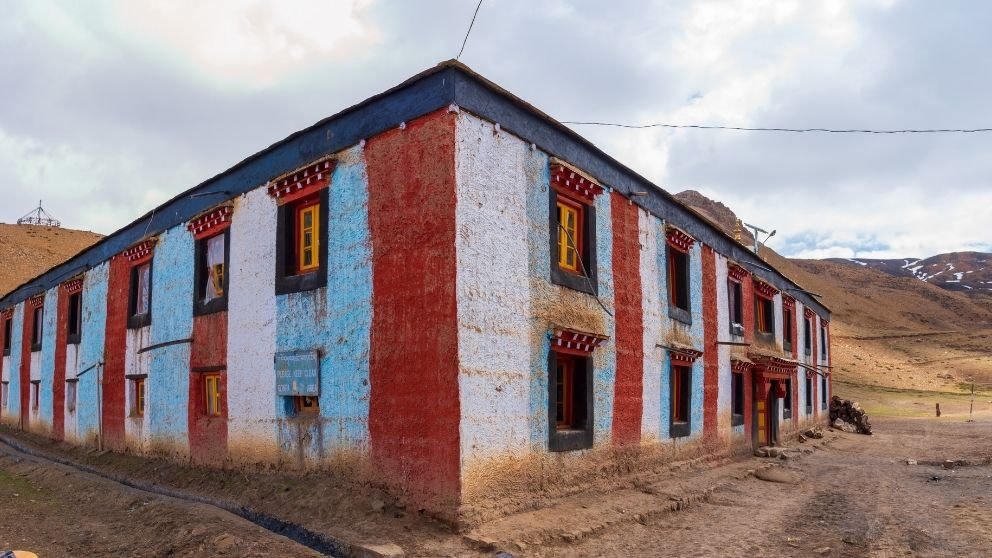
High above the busy roads of Spiti Valley lies a tiny Himalayan settlement where life moves at a completely different pace. There are no crowded markets, no busy streets and hardly any distractions. Just traditional mud houses, a centuries-old monastery, endless mountain landscapes and a peaceful village surrounded by the cold desert of Spiti.
Welcome to Komic Village, one of the most fascinating high-altitude destinations in Himachal Pradesh.
Located at approximately 4,587 metres (15,050 feet) above sea level, Komic is famous for being one of the highest inhabited villages connected by a motorable road. Although it is often promoted as the world’s highest motorable village, that distinction is disputed.
For travellers exploring Spiti Valley, Komic is much more than an altitude milestone. It is an opportunity to experience the traditional lifestyle, Buddhist culture and extraordinary landscapes of the Trans-Himalayan region.
Whether you’re planning a Spiti Valley bike trip, a family road trip or a photography adventure, this guide covers everything you need to know before visiting Komic Village.
Where Is Komic Village Located?
Komic, sometimes spelled Komik, is a small village in the Spiti Valley region of Himachal Pradesh.
It is located approximately 18–20 kilometres from Kaza by the shorter road, although the distance can be longer when travelling via Langza.
Kaza serves as the main base for visiting Komic and other nearby high-altitude villages.
The journey from Kaza takes you through a landscape that gradually changes as you climb higher. The houses become fewer, the valleys open up, and the surrounding mountains appear almost endless.
Unlike popular hill stations, Komic has very limited commercial development. The village has a small number of traditional homes, a historic monastery and basic facilities for travellers.
Komic Village at a Glance
| Information | Details |
|---|---|
| Location | Spiti Valley, Himachal Pradesh |
| Altitude | Approx. 4,587 metres (15,050 feet) |
| Distance from Kaza | Around 18–20 km via shorter route |
| Famous for | High-altitude village and Tangyud Monastery |
| Best visiting season | June to September |
| Time needed | 1–2 hours in the village |
| Nearby villages | Langza and Hikkim |
| Accommodation | Basic local homestays |
Why Is Komic Village So Famous?
The main reason Komic attracts travellers is its incredible elevation.
Standing at more than 15,000 feet, it is among the highest permanently inhabited villages accessible by road in the region.
But there is something more interesting about Komic than its altitude.
Despite the challenging environment, local families have lived in this area for generations. Winters can be extremely harsh, agricultural opportunities are limited, and daily life requires considerable adaptation.
Yet the village continues to preserve its traditional way of life.
The houses are built to withstand the cold climate, agriculture is concentrated in the warmer months, and Buddhism remains central to the community’s culture.
When you visit Komic, you’re not simply visiting a remote tourist destination. You’re seeing how people have adapted to living in one of India’s most challenging mountain environments.
Things to Do in Komic Village
Komic is not a destination filled with commercial attractions. Its beauty lies in its simplicity.
Here are some of the most rewarding experiences.
1. Visit Tangyud Monastery
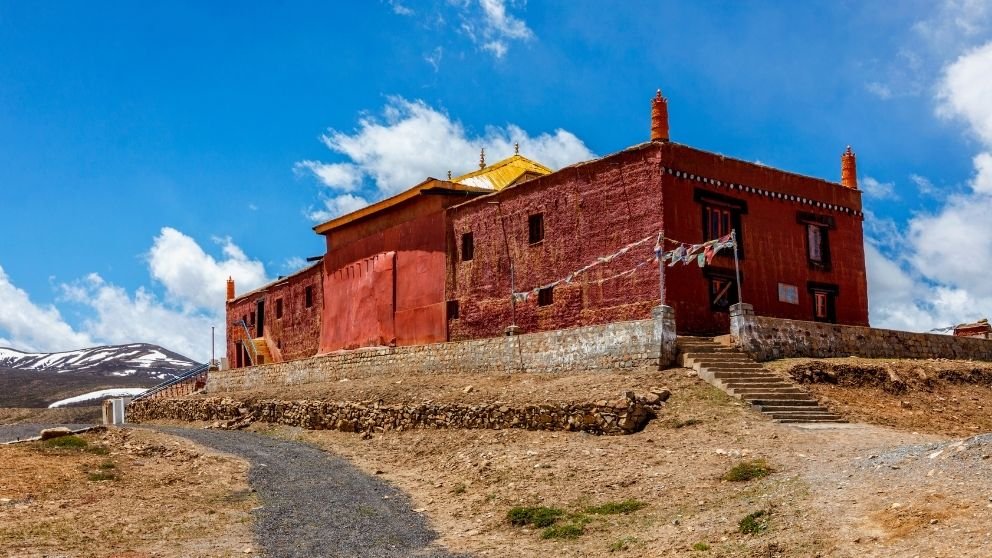
One of Komic’s most important landmarks is Tangyud Monastery, also known as Komic Monastery.
The monastery belongs to the Sakya tradition of Tibetan Buddhism and is an important religious site in the region.
Surrounded by barren mountains, its traditional architecture creates a striking contrast against the Himalayan landscape.
Inside the monastery, visitors may find Buddhist religious artwork, sacred objects and spaces used for prayer and spiritual practice, depending on which areas are open.
The monastery offers an opportunity to understand the influence of Tibetan Buddhism on Spiti’s culture.
Remember that this is an active religious site, not simply a sightseeing attraction. Speak quietly, dress respectfully and ask permission before photographing interiors or monks.
2. Experience Life in a Remote Himalayan Village
One of the best things to do in Komic is simply walk through the village.
You’ll notice traditional houses, small agricultural fields and the simple infrastructure that supports daily life at this altitude.
During the warmer months, villagers may be working in their fields or preparing for the long winter.
Agriculture in this region depends on a short growing season, with hardy crops such as barley and peas commonly grown in parts of Spiti.
If you have an opportunity to speak with local residents, you may learn about how people manage food supplies, heating and transportation during the colder months.
A brief conversation over tea can sometimes become more memorable than another photograph.
Always respect people’s privacy and seek permission before photographing residents or entering private property.
3. Enjoy the Views of Spiti’s Mountain Landscape
The landscape around Komic is unlike the green mountain valleys commonly associated with Himachal Pradesh.
Here, the mountains are mostly barren, with layers of brown, grey and golden rock stretching towards the horizon.
The skies often appear remarkably blue on clear days, creating an extraordinary contrast with the dry Himalayan terrain.
This makes Komic an excellent destination for landscape photography.
The experience changes throughout the day. Morning light highlights the contours of the mountains, while afternoon shadows create dramatic patterns across the valleys.
Even if you’re not interested in photography, it’s worth spending some time enjoying the views without rushing back to Kaza.
4. Try Local Food and Himalayan Hospitality
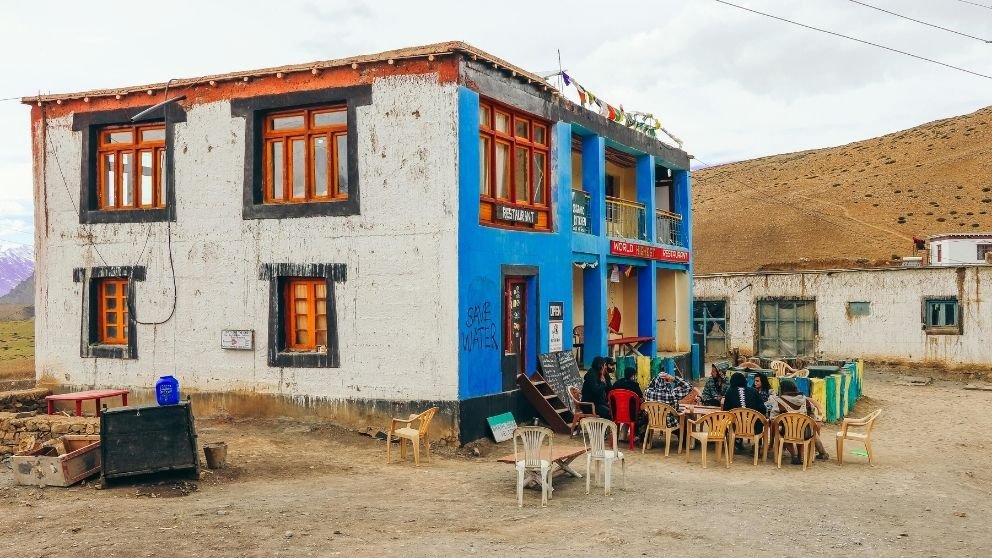
Facilities in Komic are limited, but travellers may find small local eateries or homestays serving simple meals.
Depending on availability, you may be able to try traditional dishes such as thukpa, momos or other local preparations.
A cup of hot tea feels especially comforting when you’re surrounded by cold mountain air at 15,000 feet.
Don’t expect a large restaurant menu or urban-style facilities.
Part of the experience is appreciating the simplicity of village hospitality and supporting locally operated businesses.
5. Spend a Night in a Local Homestay
Most visitors explore Komic during a day trip from Kaza. However, some travellers prefer spending a night in the village.
A local homestay offers an opportunity to experience the peaceful atmosphere after day visitors leave.
On clear nights, Spiti’s remote location and limited artificial lighting can create excellent conditions for observing the night sky.
However, overnight temperatures may be very cold even outside winter.
Accommodation is basic, and you should confirm heating arrangements, meals and availability beforehand.
Important: Because Komic is at a very high altitude, an overnight stay is not advisable for travellers who have not properly acclimatised. Spending time at Kaza first and seeking appropriate guidance is a safer approach.
How to Reach Komic Village from Kaza
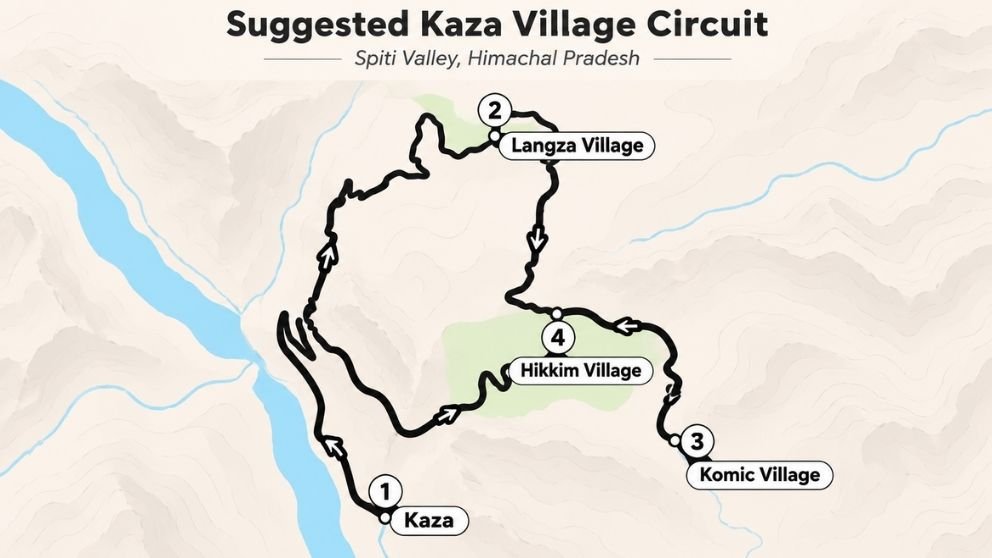
Kaza is the most convenient starting point for visiting Komic.
The route climbs from the main Spiti Valley towards the higher villages, offering beautiful mountain scenery along the way.
There are two popular ways to plan the journey.
Route 1: Kaza to Komic via Hikkim
Kaza → Hikkim → Komic
This is generally the shorter approach.
The road gradually gains elevation as you leave Kaza and travel towards Hikkim before continuing to Komic.
Some sections may have narrow turns, loose gravel or rough surfaces, depending on maintenance and weather conditions.
Allow approximately 45–90 minutes for the drive, depending on the route and road conditions.
Route 2: Kaza to Komic via Langza
Kaza → Langza → Komic
This route is particularly attractive for travellers who want to explore multiple villages during the same journey.
Langza is famous for its giant Buddha statue, mountain views and marine fossils found in the surrounding geological formations.
After exploring Langza, you can continue towards Komic.
The road passes through remarkable high-altitude landscapes, with open valleys and very little vegetation.
This route is ideal for motorcycle travellers who want to experience the high village circuit around Kaza.
Komic, Hikkim and Langza: The Perfect Day Trip from Kaza
One of the best ways to explore this area is to combine three important villages into a single day trip.
Instead of visiting Komic alone, plan the following route:
Kaza → Langza → Komic → Hikkim → Kaza
Each village offers a different experience.
Langza – The Village of Fossils
Langza is famous for its large Buddha statue overlooking the mountains.
The surrounding region is known for marine fossils, including ammonites, which provide evidence of the area’s ancient geological history.
Visitors should observe and photograph fossils without removing or damaging them.
Komic – The High-Altitude Village
Continue to Komic to visit Tangyud Monastery, explore the small settlement and experience the extraordinary landscape above 15,000 feet.
This is a good place to take a short break before continuing the journey.
Hikkim – Home to a Famous High-Altitude Post Office
Hikkim is known for its high-altitude post office, where travellers often send postcards to friends and family.
Sending a postcard from a remote Himalayan village has become a memorable travel tradition.
Postal operations and opening times may vary, so visiting the post office doesn’t always guarantee that services will be available.
How Much Time Do You Need?
Allow approximately 4–6 hours or more for the entire circuit, including photography, monastery visits, breaks and road travel.
Travellers who enjoy slower exploration can comfortably spend most of the day visiting these villages.
The route is particularly enjoyable when you’re not trying to squeeze too many additional destinations into the itinerary.
Komic Village on a Spiti Valley Bike Trip
For motorcycle enthusiasts, riding to Komic is one of the memorable experiences around Kaza.
The journey combines narrow mountain roads, high-altitude landscapes, steep climbs and some spectacular viewpoints.
However, riding at this elevation requires preparation.
What Makes This Ride Special?
The landscape changes dramatically as you climb above Kaza.
You’ll experience open mountain scenery, almost complete silence in some sections and the satisfaction of reaching a remote settlement on your motorcycle.
The route also provides excellent opportunities for photography.
Unlike long-distance highway riding, this journey is about enjoying the surroundings rather than covering a large distance.
Important Tips for Motorcycle Riders
- Start with sufficient fuel from Kaza, as there are no reliable fuel stations in the high villages.
- Check brakes, tyres and general motorcycle condition before leaving.
- Ride slowly on gravel, loose stones and narrow turns.
- Avoid unnecessary overtaking on blind mountain corners.
- Carry warm gloves and a windproof riding jacket.
- Download offline maps before departure.
- Avoid riding after dark, especially if you’re unfamiliar with the road.
- Watch for livestock, local vehicles and unexpected road damage.
Motorcycles can behave differently at high elevations, particularly when climbing steep roads. Reduced oxygen also affects the performance of combustion engines.
Ride conservatively and avoid pushing either yourself or the motorcycle unnecessarily.
If you’re planning a longer Himalayan adventure, explore our Spiti Valley Bike Tour Packages to discover guided riding experiences through the region.
Best Time to Visit Komic Village
The best time to visit Komic depends largely on snowfall, road conditions and your ability to handle cold weather.
May to June – The Beginning of the Travel Season
Late May and June often bring improving access to the higher villages around Kaza.
Snow may remain on nearby mountains, and temperatures can still be cold, particularly during the mornings and evenings.
The road to Komic may open later than some lower-altitude roads, depending on snow clearance.
July to August – Summer in Spiti
July and August are popular months for exploring Spiti Valley.
The high villages are generally accessible during favourable weather, and the landscape can show patches of greenery around cultivated areas.
Although Spiti lies in a rain-shadow region, travellers should still watch for road disruptions, especially along the approach routes through Kinnaur and other mountain sections.
September – Clear Skies and Autumn Landscapes
September is an excellent month for travellers seeking quieter roads and beautiful mountain scenery.
The skies can be particularly clear, and the mountain landscape often looks spectacular in autumn light.
However, temperatures begin dropping, especially after sunset.
October to April – Winter Conditions
Winter in Komic is extremely harsh.
Heavy snowfall and freezing temperatures can make the road inaccessible, sometimes for extended periods.
Regular sightseeing trips are generally not practical during the coldest months.
Winter travel should only be considered with suitable local arrangements, proper equipment and reliable information about road accessibility.
For most travellers, June to September provides the best balance of accessibility and travel conditions.
Can You Stay in Komic Village?
Yes, basic local homestays may be available in Komic, particularly during the summer tourism season.
These are generally small accommodations operated by local families.
Facilities may include simple rooms, home-cooked meals and shared spaces.
Availability of hot water, heating, internet and private bathrooms can vary considerably.
If comfort and a wider choice of accommodation are priorities, staying in Kaza and visiting Komic as a day trip is often more convenient.
For travellers interested in local culture and village life, a homestay can be a worthwhile experience after adequate acclimatisation.
Altitude Sickness: An Important Consideration Before Visiting Komic
At approximately 4,587 metres, Komic is significantly higher than Kaza.
The reduced oxygen availability at this elevation can affect travellers, especially those who have recently arrived from lower altitudes.
Symptoms of acute mountain sickness may include headache, nausea, dizziness, fatigue and disturbed sleep.
To reduce the risk:
- Allow sufficient time to acclimatise before visiting.
- Avoid rapid altitude gain, particularly for overnight stays.
- Stay hydrated and avoid overexertion.
- Keep your visit short if you are not accustomed to high elevations.
- Never continue ascending if you develop symptoms of altitude sickness.
Severe symptoms, including confusion, difficulty walking or breathlessness at rest, require urgent medical attention and descent.
A well-planned Spiti itinerary gives travellers time to adjust to the altitude rather than rushing from one high destination to another.
Important Travel Tips for Komic Village
Before heading towards Komic, keep a few practical things in mind.
Mobile connectivity: Network coverage can be weak or unavailable. Don’t rely on continuous mobile data.
Fuel: Fill your tank in Kaza before exploring the high villages.
Cash: Carry cash for small purchases, meals and local services. Digital payments may not work without connectivity.
Clothing: Even sunny days can feel cold because of the altitude and wind.
Food and water: Carry drinking water and some snacks because facilities are limited.
Road conditions: Check locally before departure, especially during the early and late travel seasons.
Responsible tourism: Avoid littering, respect local traditions and don’t disturb wildlife or agricultural areas.
Frequently Asked Questions About Komic Village
1. What is Komic Village famous for?
Komic is famous for its high altitude, traditional Himalayan village life and Tangyud Monastery. It is often described as one of the highest motorable villages in the world.
2. What is the altitude of Komic Village?
Komic Village is located at approximately 4,587 metres (15,050 feet) above sea level.
3. How far is Komic Village from Kaza?
Komic is approximately 18–20 kilometres from Kaza via the shorter road. The journey can be longer when exploring the Langza route.
4. Is Komic the highest motorable village in the world?
Komic has long been promoted using that title. However, the claim is disputed because other high-altitude inhabited settlements also have road access. It is more accurate to describe Komic as one of the highest motorable villages in the Himalayan region.
5. Can we visit Komic Village by motorcycle?
Yes. Komic is accessible by motorcycle during suitable road and weather conditions. Riders should be comfortable with steep mountain roads, narrow turns and occasional gravel sections.
6. Is Komic Village open in winter?
The village remains inhabited, but heavy snowfall can make the approach road inaccessible. Winter tourist access is highly dependent on weather and snow clearance.
7. Is there accommodation in Komic Village?
Basic local homestays may be available during the travel season. Facilities are limited compared with Kaza, and advance confirmation is recommended.
8. Can we visit Langza, Hikkim and Komic in one day?
Yes. These three villages are commonly explored together on a day trip from Kaza. Allow approximately 4–6 hours or more for a comfortable experience.
9. Is it safe to visit Komic Village?
Komic is a popular travel destination, but its high altitude, rapidly changing weather and mountain roads require caution. Proper acclimatisation and checking local road conditions are particularly important.
Final Thoughts: Is Komic Village Worth Visiting?
Absolutely.
Komic Village may not have luxury hotels, shopping streets or countless tourist attractions, but that is exactly what makes it special.
Its beauty comes from the simplicity of life, the surrounding Himalayan landscape and the feeling of being far away from the modern world.
The journey from Kaza is short in distance but memorable in experience.
Whether you’re standing outside Tangyud Monastery, enjoying a cup of tea in a small village home or watching the mountain shadows stretch across the valley, Komic offers a different perspective on Spiti.
For motorcycle riders, the high-altitude village circuit is especially rewarding. It gives you the chance to explore Langza, Komic and Hikkim while experiencing some of Spiti’s most distinctive scenery.
At Spiti Riders, we believe that exploring the Himalayas should be about more than reaching a destination. The local culture, mountain roads and people you meet along the way are equally important.
As a locally operated tour team, we manage our Spiti experiences directly rather than simply passing bookings to third-party operators.
Planning your Spiti Valley adventure?
Explore our Spiti Valley Bike Tour Packages or read our Spiti Valley Itinerary for 5 Days to start planning your journey.
Spiti Riders — Ride Beyond the Ordinary.